Performance management is often overlooked, but it's a crucial part of work in 2026. Beyond the traditional annual review, performance management in 2026 is more continuous, personalised and designed to move the needle in the flow of work. So what does it look like and how does it work? Read on to find out...
Whether you realise it or not, performance management is part of every single business.
When we think of performance management, we tend to think of formal annual appraisals, where nervous employees sit down with their managers and discuss their performance over the last 12 months.
But for many businesses, there’s a whole lot more that goes on behind the scenes! From weekly or monthly check-ins to in-the-moment feedback to ongoing coaching, there’s a wide spectrum of performance management activities, from very formal to very informal. When it’s done well, it may not even feel like performance management – it should be an expected, normal part of working life.
What we do know, though, is that standalone, formal performance conversations are fast becoming a thing of the past. In 2026, performance management prioritises continuous feedback, tailored mentorship and – yes – AI-powered insights. If you’re wondering how your business measures up, we’ve pulled together five of the top 2026 performance management trends. Let’s jump in!
1. AI-powered performance insights
77% of early-career workers believe AI will help them advance in their careers.
- Deloitte
It probably won’t surprise anyone to learn that AI-powered performance management solutions are attracting a lot of attention right now.
But it’s not just ‘AI for the sake of AI’ – businesses implementing AI-enhanced tools are seeing tangible improvements to their performance processes. For instance, AI-powered performance management tools result in a 50% increase in goal achievement rates, and a 25% reduction in time spent on performance evaluations.
Better goal attainment, less time spent on performance management – great, right? Well, there’s more. Introducing AI into the performance management process reduces bias in assessments by 33%. While a human manager may be biased positively or negatively towards an employee, which can skew their qualitative assessments of notoriously hard-to-measure soft skills and behaviours, AI can base its reviews on cold, hard data, making the process fairer and more accurate for everyone.
AI is also very useful for spotting ‘flight risks’. AI can predict potential employee turnover in the next 12 months with up to 96% accuracy, including the likely reasons for leaving, which can help businesses act in time to save their top talent. These deep, data-driven insights are invaluable when it comes to helping companies save time and money by better understanding their people, and ensuring managers have the right information to keep employees skilled, motivated and engaged.
2. Integrated skills development and continuous learning
In the past, performance management has been a purely retrospective exercise. It can feel a bit like receiving a school report at the end of the summer term, where your performance to date is rated, but little thought is given to your future skills development or performance potential.
65% of workers prefer to learn via on-the-job training, which reflects the growing appetite for continuous learning cultures in 2026. In fact, employees with access to continuous learning are 47% more likely to be engaged at work than those without.
So what does this continuous learning look like in 2026? Crucially, upskilling is being baked directly into the performance management process – not just once a year, but in every conversation. If an employee is missing a job-critical skill, switched-on businesses are looking to address it in the moment.
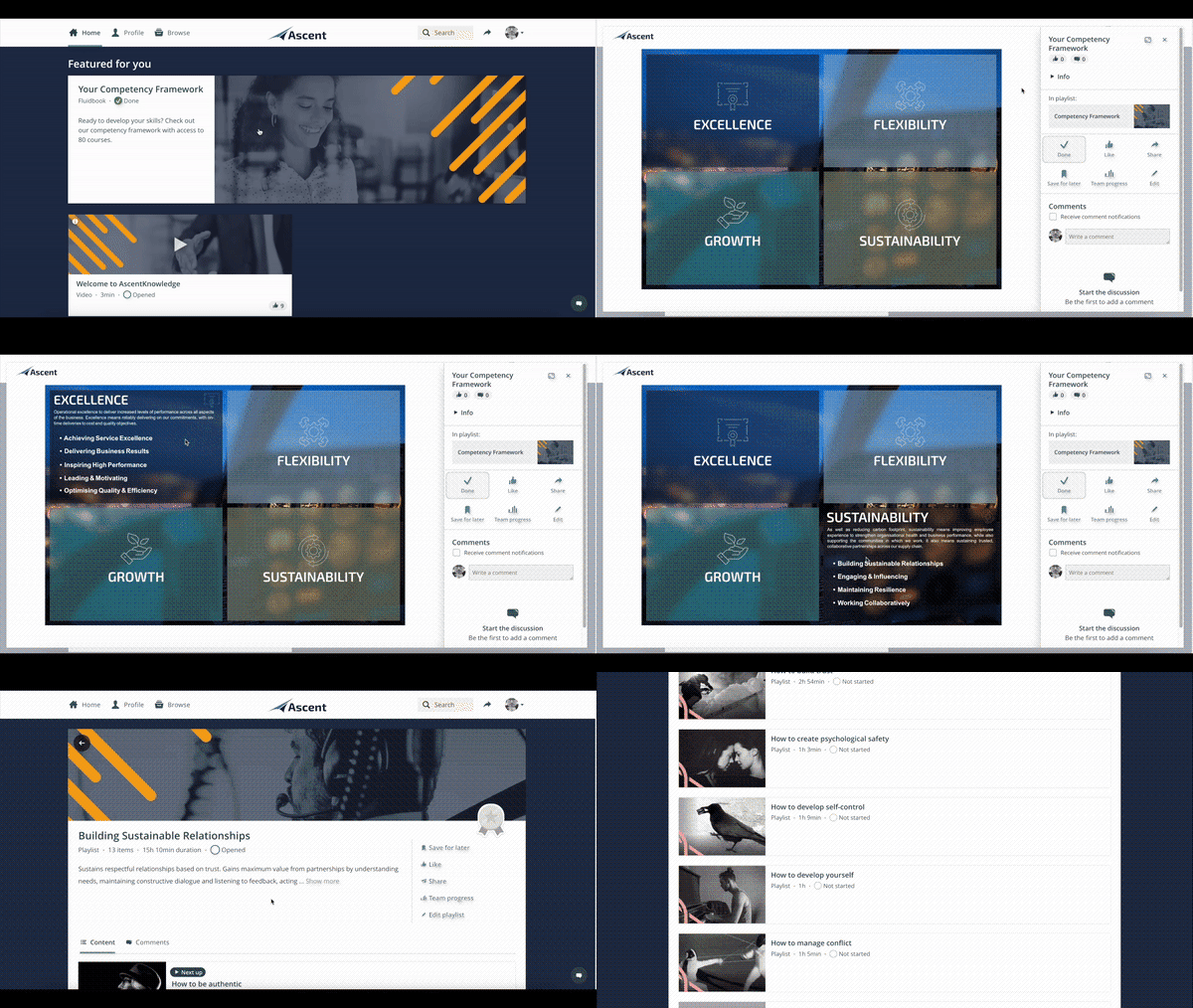
More and more frequently, businesses are integrating their learning management systems with performance tools or skills frameworks. For instance, 5app customer Ascent Flight Training built a comprehensive competency framework (shown above) right within the LMS to ensure every employee knows exactly what skills they need to progress in their careers, and what training they need to get there.
3. Tackling skills gaps through proactive planning
79% of SMEs have identified skills gaps in their organisation in the past 12 months.
- CIMA
Following on from the previous point, skills gaps remain a major concern for businesses – especially where evolving technology (such as AI skills) is concerned. Unsurprisingly, these skills gaps are making employees nervous – very nervous.
To be clear, these skill gaps aren’t because employees don’t want to learn. The appetite for skills training has never been higher, with a staggering 82% of employees saying they want to upskill – yet two-thirds of those employees haven’t received any formal training in the past year.
48% of Gen Z employees want more training on hard skills.
- Adobe
Smart organisations are anticipating skills gaps and proactively seeking ways to close them before those gaps become chasms. That could be done via painstaking manual research (such as monitoring industry trends and keeping a close eye on new technologies), or by using AI to plot, predict and recommend upcoming skills.
AI-powered skills development makes it significantly faster and easier to identify new skills and map them onto employee roles, giving learners the skills training they so desperately want.
Now if only there was a way to track the development of those skills in the workplace…
4. Demand for mentorship opportunities is outstripping supply

Employees are fans of workplace mentoring – particularly Gen Zs, 83% of whom say a mentor is crucial to their career success. 31% of early-career employees are engaged in formal mentoring at work, alongside 23% of experienced workers.
Mentoring is a low-cost, high-impact way to boost employee performance – particularly when it comes to leadership and soft skills, with more experienced employees imparting their wisdom and sharing the lessons they’ve learned over the years.
But demand is outpacing supply. The Great Resignation of the early 2020s has seen millions of experienced potential mentors quit their long-term jobs and change industries entirely, leaving mentees without mentors to guide them.
Mentoring is particularly important for organisations prioritising DEI. 63% of companies with mentoring programmes focused on diversity and inclusion see positive impacts on gender diversity, which is especially important when we consider that while 83% of men know what’s required of them for their next promotion, this number falls to 71% for women and non-binary, transgender and gender non-conforming employees.
A staggering 97.6% of Fortune-500 companies have a mentorship programme – maybe 2026 is the year the rest of us should follow in their hugely successful footsteps.
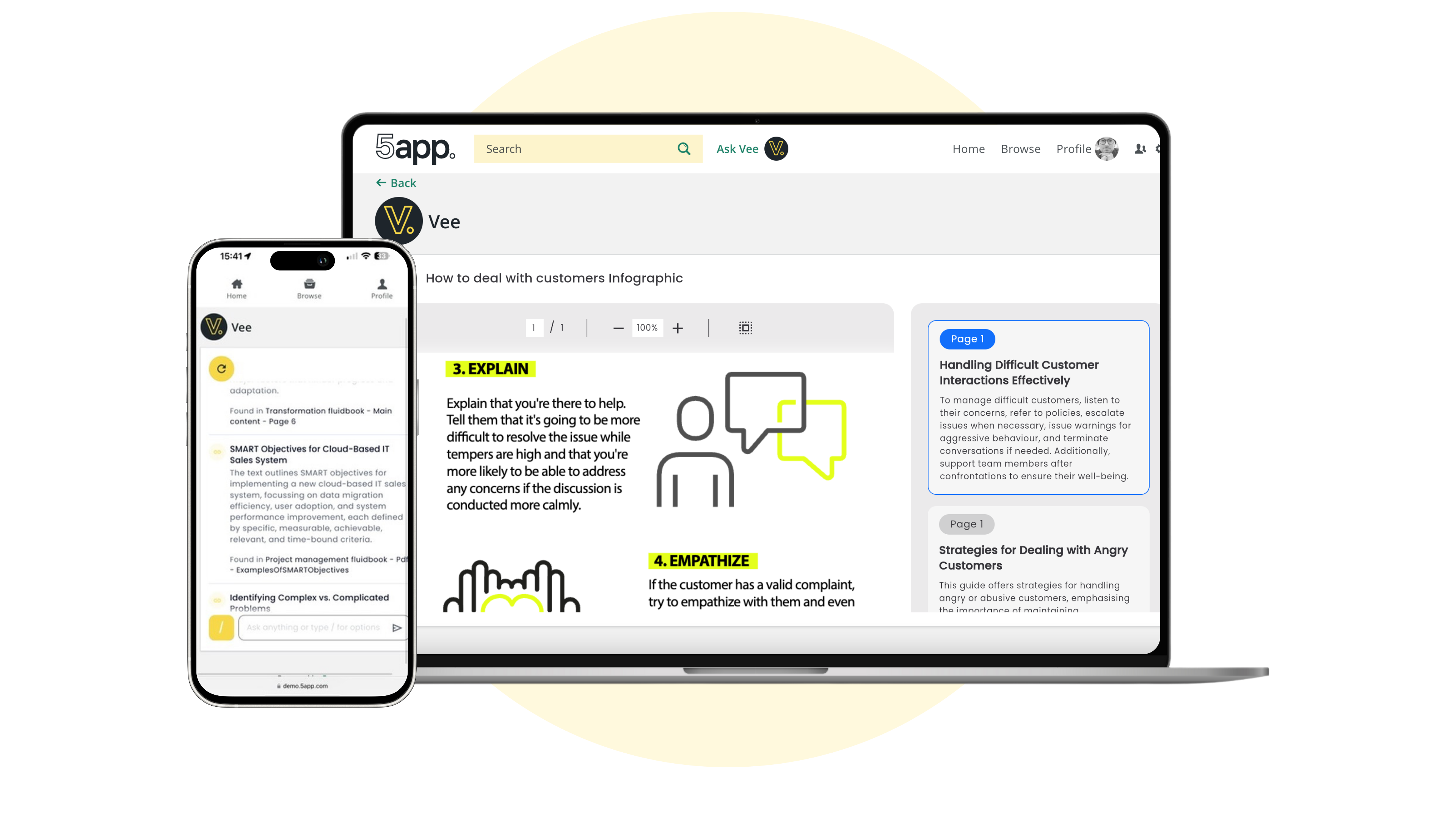
Struggling to keep up with coaching and mentoring opportunities for your employees? Find out why AI coaching could be right for your organisation with a VeeCoach demo.
5. A more holistic view of performance
In the past, performance management has hinged on a mish-mash of metrics and manager feedback. At best, it will be based on trackable data, such as productivity, customer ratings and sales, or measured in a formal performance framework, such as KPIs or OKRs. At worst, it will be based on a manager’s gut instinct, their own biased opinion or, at its very worst, a bunch of assumptions based on things like whether the employee comes to happy hour drinks or is the last to leave their desk at the end of the working day.
In 2026, performance is about so much more than all of this. Organisations are evaluating the employee as a whole. That means taking into account their personality, career goals, interests, working style and factors outside of their control, such as a turbulent working environment, team turnover or industry-wide uncertainty.

Part of this is a desire to more accurately track soft skills, such as collaboration, communication and adaptability, which can’t typically be done through an elearning course or attendance at a one-day workshop. Instead, developing a more holistic understanding of employees means digging deeper into their day-to-day roles.
Typically, this would require a lot of disconcerting manager observation. Managers might need to lurk in the background during meetings or presentations, surreptitiously taking notes for future performance feedback. It also leaves the process open to unconscious bias – for example, would managers inadvertently rate their ‘favourite employees’ higher than those they’re less close to, even if their skill level is the same?
That’s why in 2026, there’s an urgent need to do more with the wealth of data available to us. Everything we need to holistically understand our employees is right there – we just need the right tools to unlock it all. It’s only by doing this that we can start building performance management processes we can truly be proud of, that meet the needs of our businesses, our L&D teams and our employees.
FAQs about performance management
From guesswork to greatness: 5app's new era for L&D
.png?width=1920&height=1080&name=Helix%20-%20Reviewing%20Dashboard%20(1).png)
The way we measure and manage performance has changed. 5app is leading the way when it comes to a new approach to performance management, as we're unlocking hidden soft skills for the very first time for a more holistic view of your people and what they can do.
That solution is Helix, our AI skills intelligence platform. With Helix, you can track real soft skills in the flow of work for an unbiased, objective insight into employee behaviours at work. This helps you move away from subjective self-assessments (where everyone, miraculously, rates themselves 10/10 across the board) and unhelpful once-a-year performance reviews. Instead, Helix provides everyone with a continuous feedback loop to support them in the moment and nudge them towards skills improvement with no need for manager intervention.
Want to see how Helix works? Sign up below to start your 30-day free trial to see how Helix can transform your performance management in 2026.