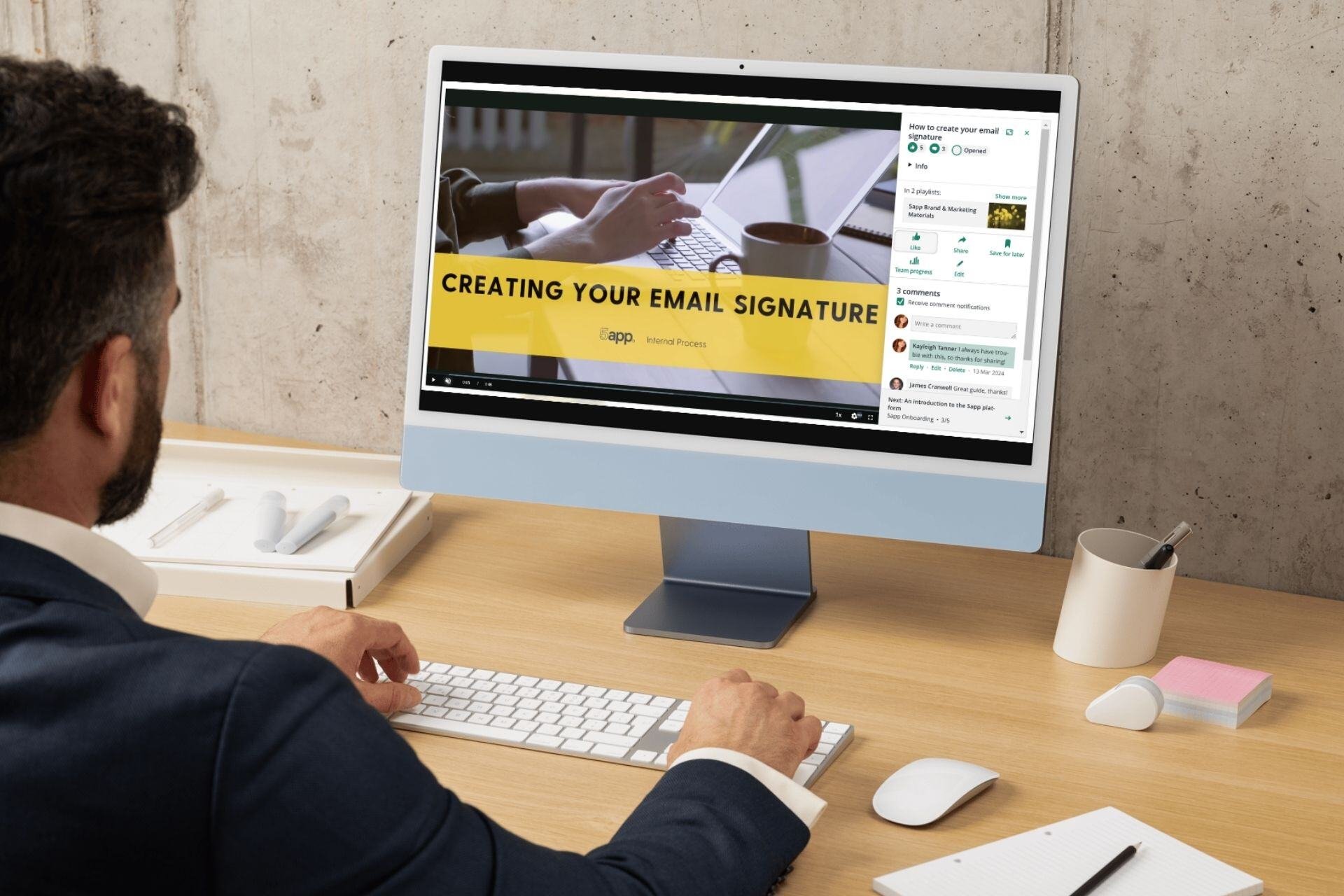
8. Employee onboarding sets the tone for a new hire’s experience, impacting retention, productivity, and long-term loyalty. A well-chosen learning management system (LMS) centralises onboarding training, automates routine tasks, supports compliance, and delivers personalised learning experiences. Getting employee onboarding right starts with choosing the right LMS... so what does the best LMS for employee onboarding look like?
Why choosing the right LMS matters for employee onboarding
A strong LMS for employee onboarding helps companies:
- Improve employee retention and engagement
- Streamline training processes
- Ensure compliance with legal and job-specific requirements
- Deliver consistent, role-based learning
- Make learning easy to access for all team members
In contrast, the wrong LMS can leave new starters feeling stuck, confused and with a less-than-stellar impression of their new employer, which no one wants!
Core features to look out for in an LMS for onboarding
When you're welcoming new hires to your organisation, there are several key features and must-haves for your LMS. Let's take a look at them in more detail.
1. A clear, intuitive user experience (UX)
An onboarding LMS should be:
- Easy to navigate for all users
- Intuitive without extensive training
- Consistent in design and structure
- Accessible on desktop and mobile devices
A positive first experience reduces frustration and increases adoption among new employees.
That means developing a clear, intuitive UX that just... works. You don't want to send new starters on a wild goose chase on their first day to find what they need, so set them up for success with easy navigation, a consistent experience across all devices (including desktops, tablets and smartphones) and minimal clicks to ensure everyone can find what they need, when they need it.
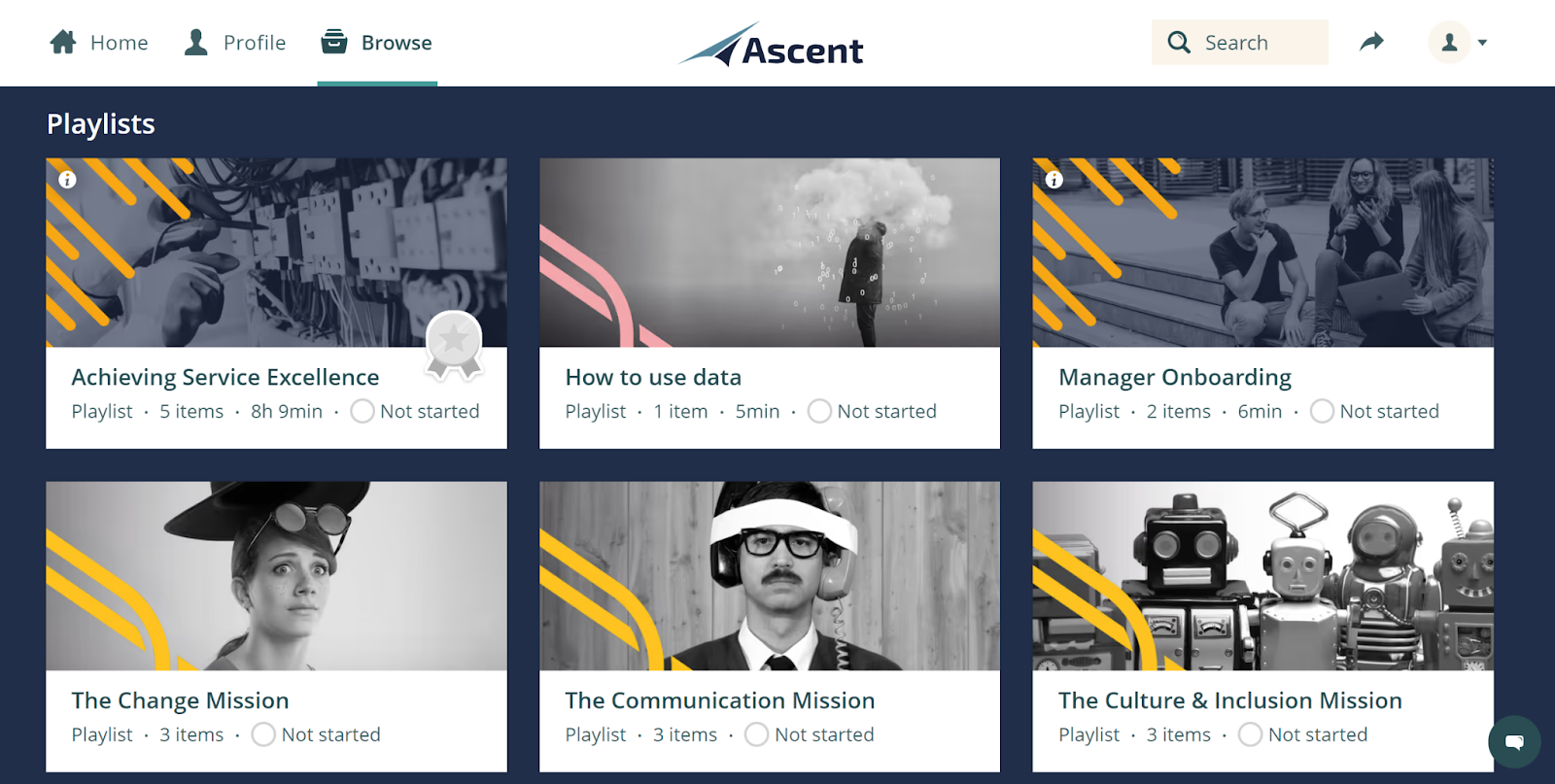
An intuitive UX is particularly important when you’re welcoming a diverse range of new employees to the business. Companies like Ascent Flight Training welcome employees with varying levels of technical proficiency, so a simple, user-friendly LMS like 5app is a must.
2. Customisable branding and look and feel
Think of your LMS as your shopfront – especially for new starters, who will likely visit the LMS before anything else as part of their digital introduction to your organisation. Your LMS should reflect your company identity by allowing:
- Custom branding (logos, colours, visuals)
- Tailored welcome screens and dashboards
- Personalised onboarding paths based on role or location
This creates a more engaging and seamless onboarding experience from day one.
A generic, one-size-fits-all LMS won't convey the right first impression, and something as simple as uploading branded banners or thumbnails can completely transform the look and feel of your LMS during the crucial early days of a new hire's time with you. It doesn't need to be complicated or flashy, but it does need to feel authentically yours.
3. Streamlined compliance training and certification
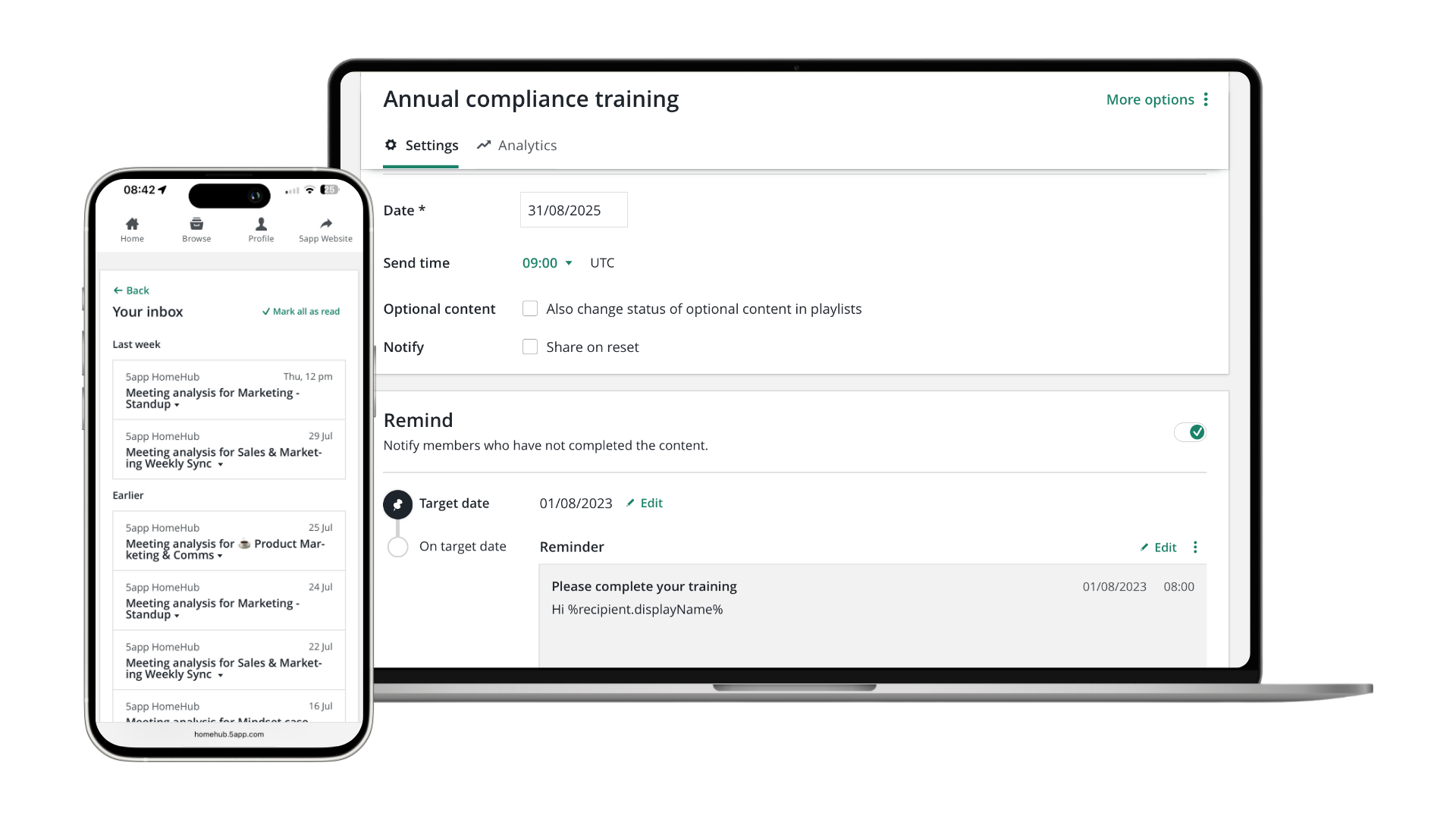
Onboarding often involves mandatory training (e.g. health and safety, GDPR or professional standards). A strong LMS for employee onboarding should support:
- Compliance playlists or learning paths
- Automated certification issuance
- Recertification reminders and scheduling
These features help prove compliance and protect the organisation from the very start of a new hire's journey. It also helps remove the need for a new hire to set manual reminders for when recertification is due, allowing them to focus fully on getting up to speed in their new role and not held back by tedious admin.
4. Automated reminders and intelligent nudges
Human error and overwhelm are big risks in onboarding on both the new hire and the HR side. There are lots of moving parts for the new starter to grasp, and lots of processes for HR to get right to ensure that the onboarding process goes smoothly. Automation features should include:
- Scheduled reminders for pending onboarding content
- Role-specific nudges tailored to relevance (such as Greystar's learning academies)
- Proactive notifications that guide new hires through key milestones
For instance, the HR or L&D team could set up notifications or nudges via the LMS for a new hire's first week, ensuring they receive direct links to important forms, documentation, courses and policies. This constant drip-feed can be less overwhelming than a single list of every single resource, and ensures new hires see the right content in the right order.
Effective reminders keep onboarding moving forward and increase completion rates, and ensure that nothing slips through the cracks.
5. Easy access to relevant content
As a newbie, the last thing you want is to dig through a labyrinth of SharePoint folders to find the right onboarding materials, or to search through the LMS to possibly, maybe, hopefully find the most useful content assets – especially for remote new starters, who can't just tap a colleague on the shoulder for help.
There are several approaches you can take to surface relevant content for onboarding:
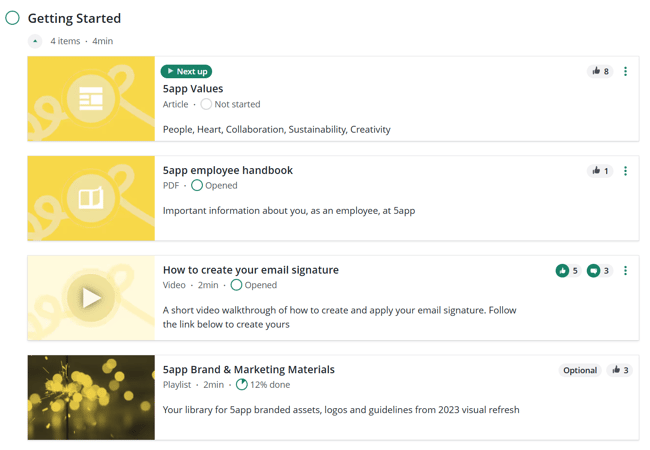
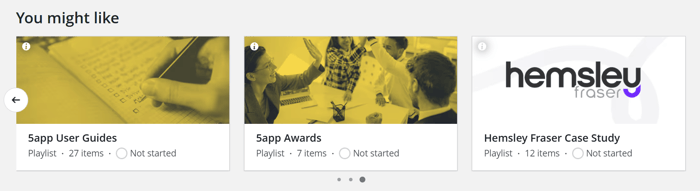
- Playlists – Playlists pull together content around a central theme or topic (in this case, onboarding, perhaps tailored to a specific role or location). The Playlist can be saved to a new starter’s profile so they have easy access to the content, and they can see at a glance how much is left to complete.
- In-LMS content recommendations – on the LMS homepage, you can both push relevant content to new employees (by ‘featuring’ the content on the homepage or sharing it directly with the new starter), or let the algorithm surface content it thinks will be useful (such as the ‘You might like’ block).
-
AI tutor agent – VeeCoach, 5app’s AI tutor agent, makes content discovery faster and more powerful than ever before, helping you enhance the employee onboarding experience with AI . Instead of having to go searching for the right content, new employees can simply ask VeeCoach a question, using natural, conversational language, and it will find the right answer from all the content uploaded to the LMS. It can also help out with coaching for reskilling, and can act as a handy ‘digital buddy’ throughout the onboarding period.
6. High-quality learning content
It's all very well having a slick, intuitive LMS... but the onboarding content is often what lets the entire process down. Many organisations rely on the same outdated employee handbooks or dry PDFs, which are riddled with broken links or irrelevant information, making onboarding needlessly confusing.
If this sounds familiar, it could be time to breathe new life into your onboarding content with AI-powered content creation.
If you’re struggling to create high-quality onboarding content, an AI content authoring tool like VeeCreate could be the answer. Instead of spending weeks piecing together an elearning course, you can submit a prompt (or an existing onboarding document, such as a PDF or PowerPoint) and turn it into a fully branded course, complete with activities and quizzes, in minutes.
Sound good? Find out more about VeeCreate, or watch your on-demand VeeCreate demo.
7. Integration with other business systems
.png?width=1280&height=720&name=Integrations%20%26%20Partners%20(white%20BG).png)
The early days of bringing a new employee on board involve a lot of tedious admin. Creating employee records, setting up accounts, creating endless passwords… it’s a lot of hassle for both the new employee and the HR team responsible for getting them set up.
The best LMS for employee onboarding is one which integrates with your other systems. This could be:
- HR information systems (HRIS) such as HiBob or Workday
- Workforce management tools such as Oracle
- External learning libraries such as LinkedIn Learning
- Comms tools such as Microsoft Teams, Google Meet or Slack
- Video conferencing tools such as Zoom
- Analytics tools such as Power BI
Integrations make the life of any HR or L&D professional ten times easier, so finding an onboarding LMS with easy integrations is a no brainer!
8. Robust reporting and analytics
Reporting and analytics are an often-overlooked, yet vital element of the employee onboarding process. They give you a useful benchmark from the start of a new hire's time at your company, and allow you to assess the impact and efficacy of your onboarding programme.
Analytics help you measure onboarding impact by tracking:
- Course completion rates
- Time spent on onboarding activities
- Engagement trends
- Compliance outcomes
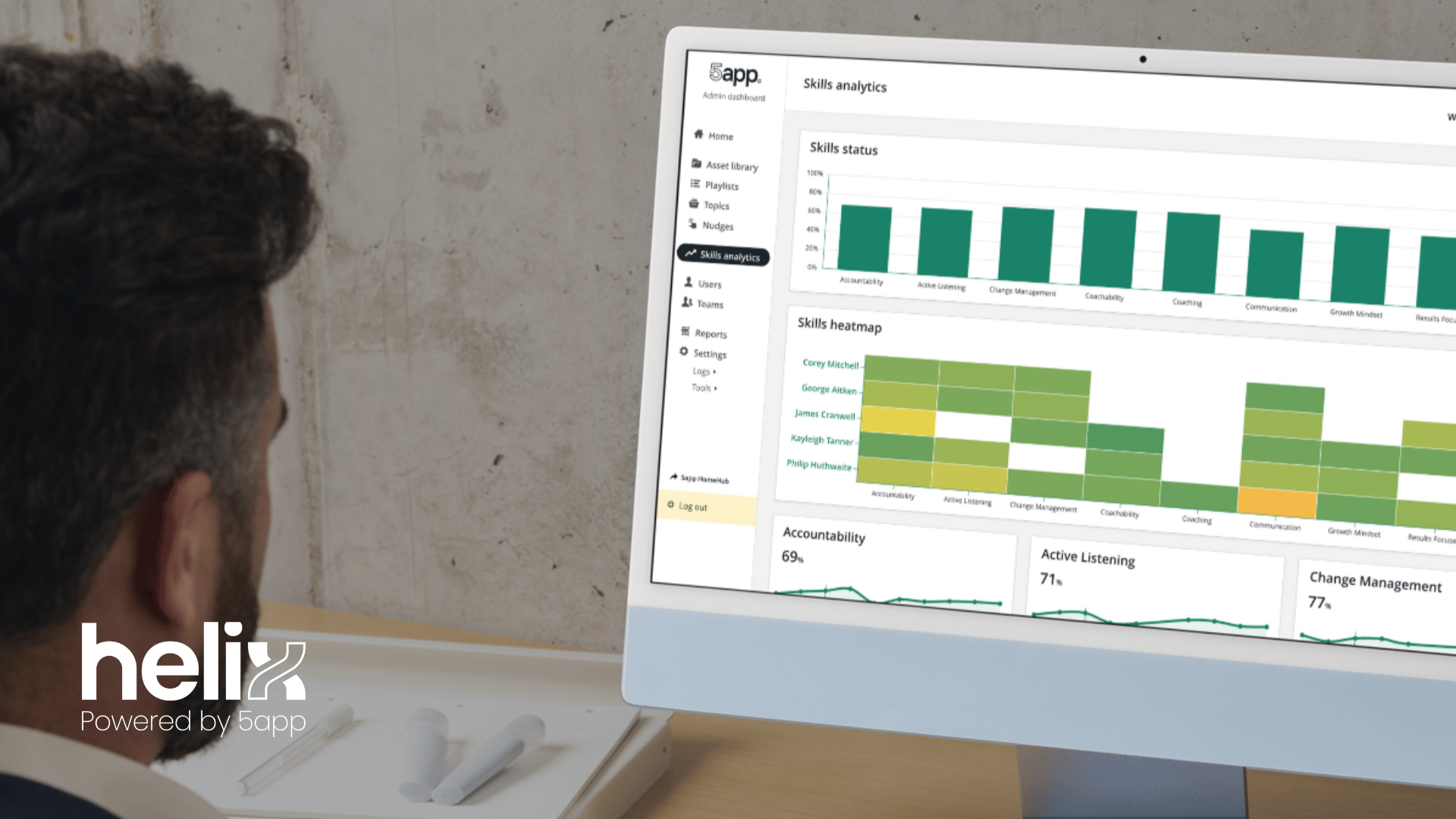
However, you could even go a step further and measure new employees' skills from the very start of their journey. Helix, our AI skills intelligence platform, allows you to track and measure soft skills in the flow of work. Again, this gives you a useful benchmark of skills like communication, accountability or strategic vision, along with a whole host of custom skills tailored to your organisation's priorities and values, helping you understand each new starter's growth across their entire employee journey.
Wondering how Helix works? Start your free 30-day trial today!
Recap: what makes a great LMS for onboarding?
The best LMS for onboarding is one that:
- Improves learner engagement
- Automates administrative tasks
- Supports personalised, role-based learning
- Tracks compliance and learning effectiveness
- Integrates with your HR and tech stack
Choosing the right system can transform onboarding into a strategic advantage by boosting retention, driving productivity and strengthening your employer brand — not just now, but for years to come.
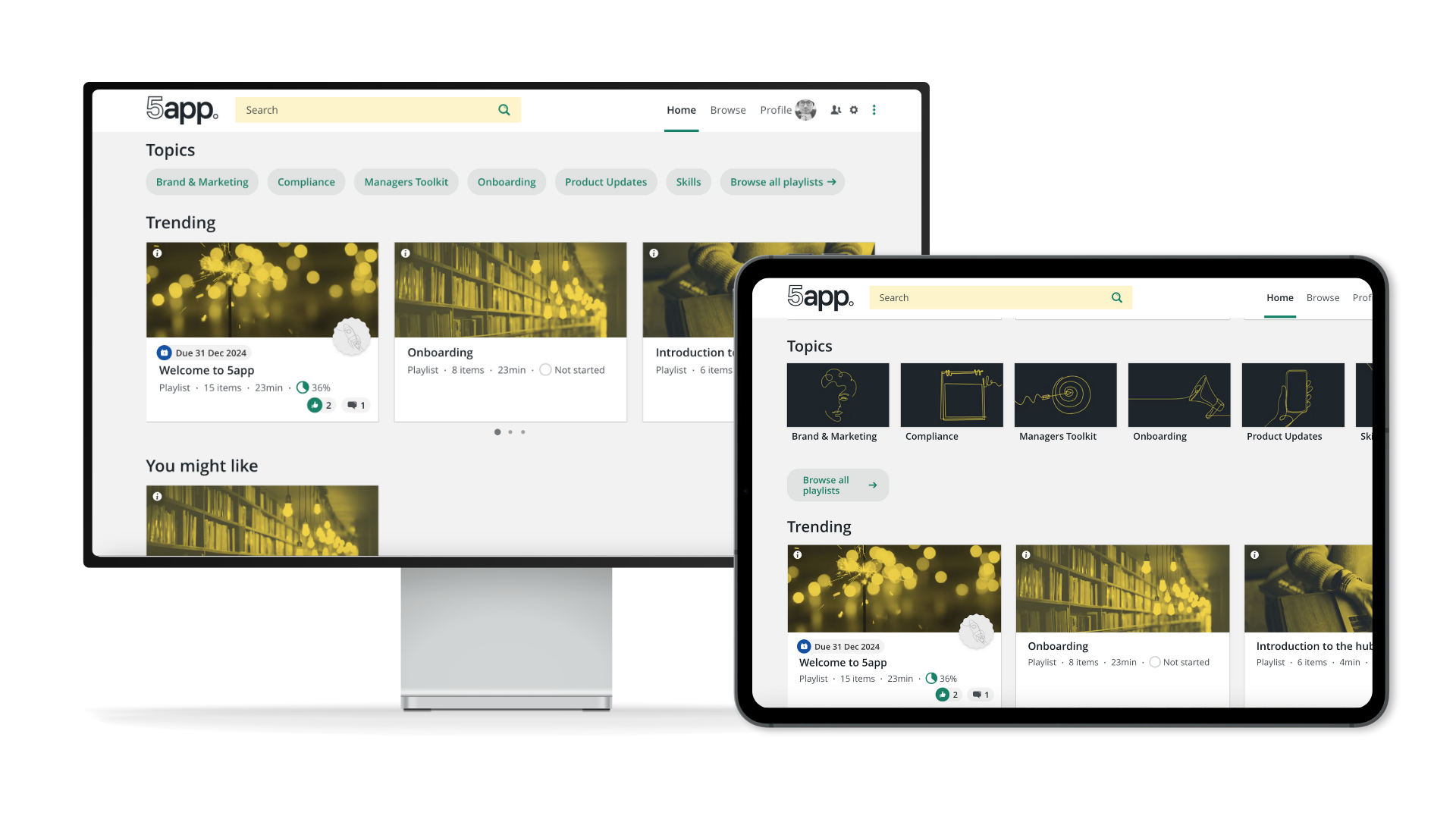
An LMS like 5app's Hub is perfect for organisations looking to level up their employee onboarding. It's intuitive, looks great and keeps learners engaged throughout the entire employee lifecycle with customised reminders, personalised content recommendations and structured playlists for onboarding and beyond.