If you’ve ever been tasked with rolling out training for your team, you’ve probably asked yourself: should we go microlearning, or stick with traditional elearning? The answer isn’t always straightforward. With shrinking attention spans, mobile-first workforces and rising content demands, understanding which format actually drives learning is crucial for getting the results you need.
That’s why we’ve put together this handy comparison to help HR and L&D teams cut through the confusion and create learning content that sticks – whether that’s an hour-long elearning module or a 2-minute video.
What is microlearning?
Microlearning delivers training in small, focused bursts, usually 2–10 minutes long. Instead of lengthy modules, content is broken down into single objectives or topics, often delivered via short videos, infographics, tables or checklists.
The goal is quick knowledge acquisition and retention, often reinforced with quizzes, interactive scenarios or spaced repetition. Unlike traditional elearning, microlearning emphasises immediate applicability and flexibility, making it ideal for fast-paced or mobile-first teams, or teams who would benefit from just-in-time performance support delivered in the flow of work.
What’s the evidence to support microlearning?
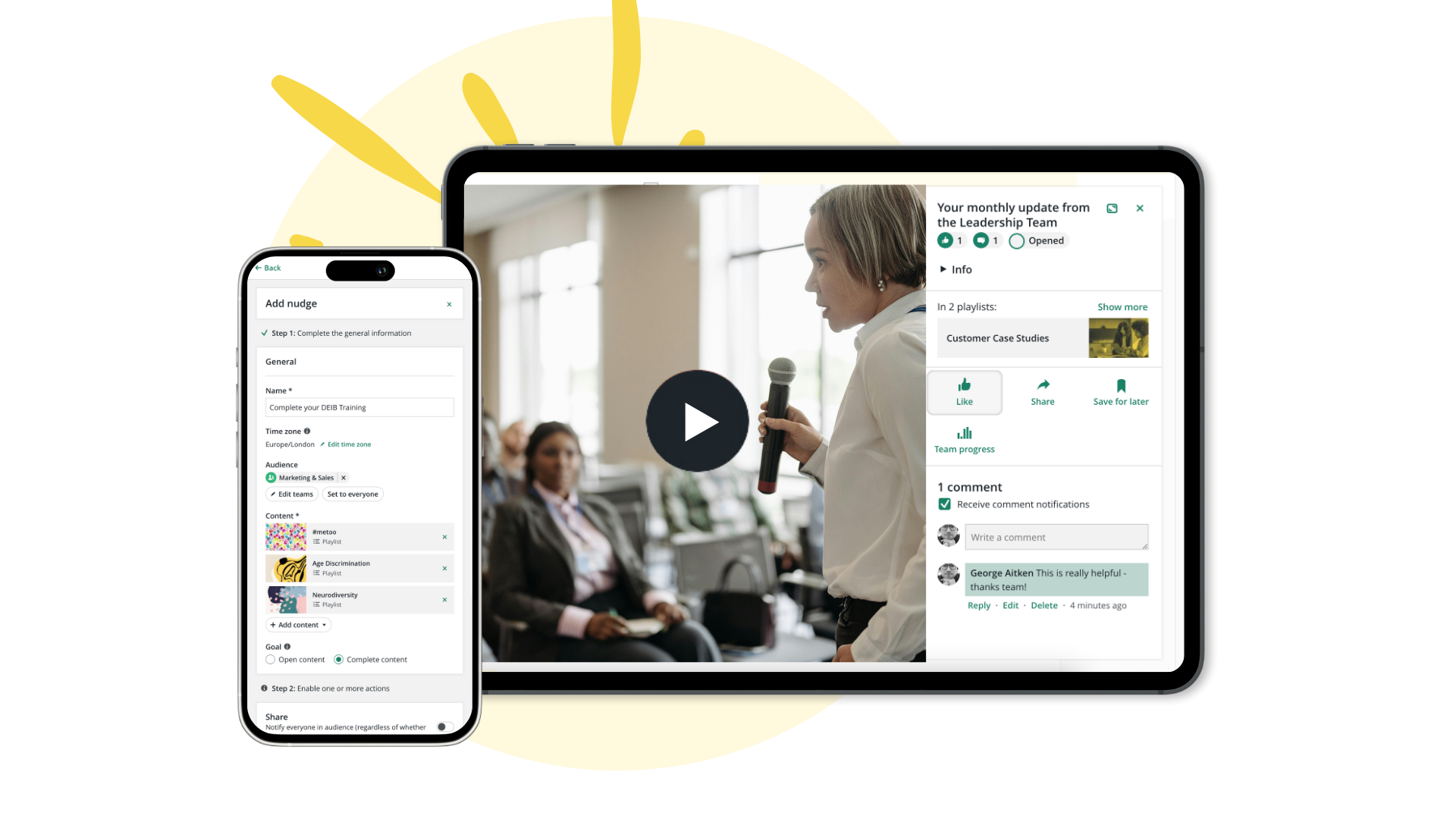
Learning retention isn’t just about getting to the end of hour-long elearning module. Research consistently shows that short, digestible chunks improve memory and recall. Humans can only hold 4-7 items of information in their working memory at a time, meaning that cramming a learner’s brain with an hour’s worth of information simply isn’t effective.
Instead, knowledge retention is influenced by engagement, repetition and context. Microlearning is most effective when it’s relevant, immediately applicable and spaced over time (also known as spaced practice), allowing learners to revisit knowledge before it fades. Studies have shown that microlearning can increase knowledge retention by at least 20%, with some research suggesting it could be as high as 60%, as it’s easier to remember short, sharp bursts of highly specific, contextual information rather than digesting a huge volume of content.
Traditional elearning still has a place for complex concepts requiring deep understanding, but without reinforcement, even a 90-minute module risks being forgotten within a week.
When microlearning works (and when it doesn’t)
To be clear, we’re not saying that it’s time to replace all of your traditional elearning content with microlearning. There’s a time and a place for both approaches – it’s just important not to default to a traditional elearning course when microlearning may be more suitable.
Microlearning shines when:
- You need just-in-time learning, like software tutorials or policy refreshers
- Learners are time-poor and prefer mobile access
- Training benefits from spaced repetition, such as compliance updates or product refreshers
Microlearning struggles when:
- The subject matter is deep or complex, like leadership development or regulatory frameworks
- Learning requires reflection, discussion or problem-solving
- Contextual understanding is critical – splitting content into tiny bites may dilute meaning
For instance, for quick tips ahead of a high-stakes sales pitch, a salesperson may find it useful to pull up a two-minute video or handy checklist on their mobile phone for a refresher. However, for more complex subject matter requiring in-depth understanding of multiple factors, such as mental health first aid, a longer elearning course may be more appropriate to ensure the material is covered in sufficient detail.
The key is recognising that microlearning is a tool, not a complete replacement for traditional elearning. It shines for reinforcement and performance support, but much like anything else, it should never be your single delivery method.
How can I blend traditional elearning with microlearning?
Many organisations succeed with blended learning: pairing microlearning with traditional elearning or in-person sessions. For example, for a leadership course, an organisation could:
- Launch a 90-minute elearning module to cover foundational leadership concepts
- Follow up with 5-minute microlearning bursts to reinforce key points over several weeks
- Add an in-person team discussion to explore the concepts in more depth and support peer-to-peer learning and expose learners to different perspectives
Blended approaches leverage the strengths of each format: depth and narrative from traditional learning delivery and reinforcement and convenience from microlearning. Choosing a single method will limit the impact of your learning programme, whereas opting for a range of approaches will help make learning more memorable and genuinely useful in learners’ day-to-day roles.
How do I design learning for mobile-first teams?
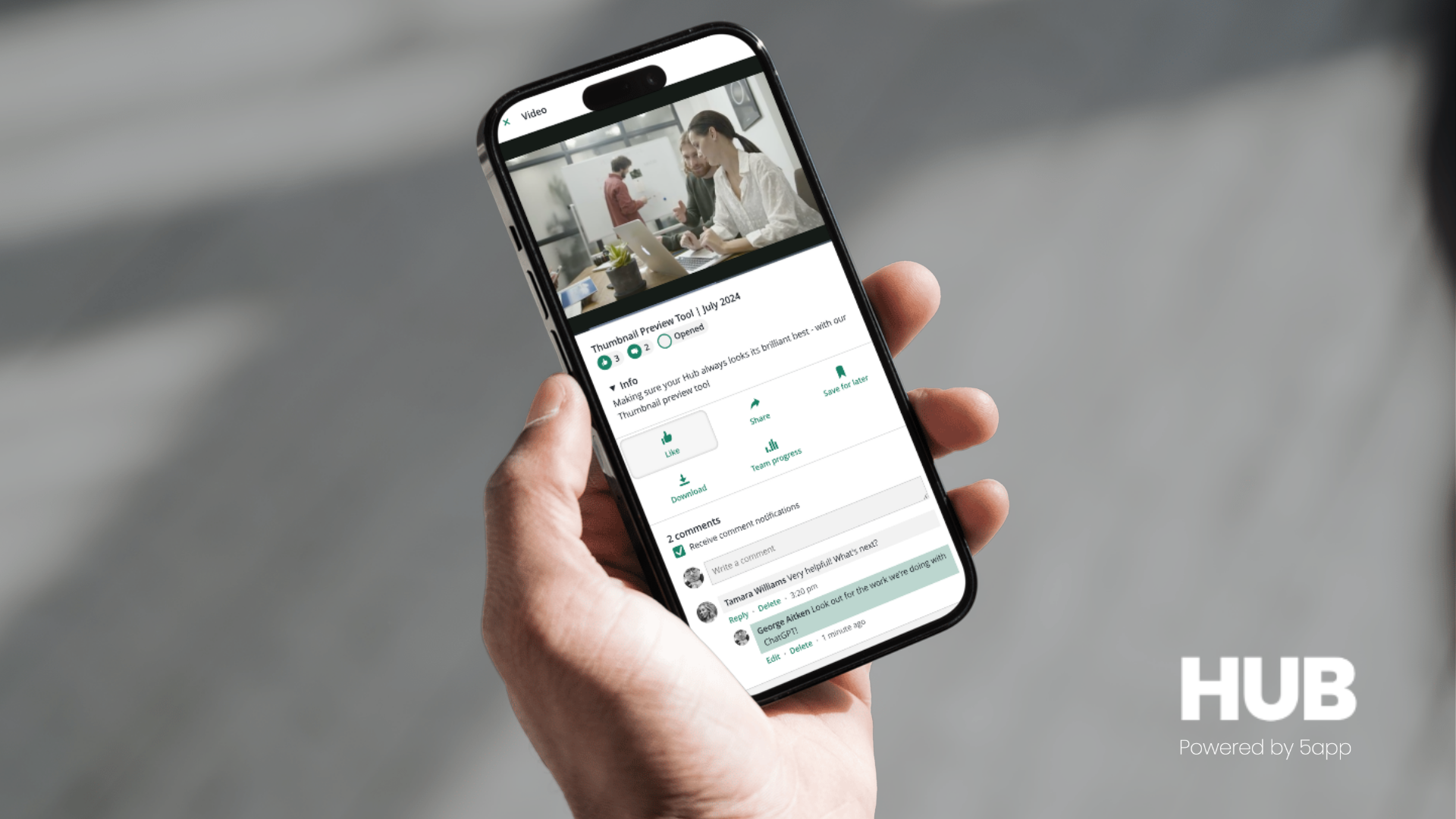
For teams on the move, mobile optimisation isn’t optional – it’s essential. Microlearning is naturally mobile-friendly, but design matters. Think about:
- Short, snackable modules: Stick to 3-7 minutes per session for quick, easy learning on the go.
- Clear, single learning objectives: Avoid information overload by setting one objective per microlearning asset.
- Interactive elements: Polls, quizzes and quick activities boost engagement – think about Duolingo’s two-minute language learning lessons.
- Mobile-friendly formats: A short ‘talking head’ video? Fine. A detailed diagram requiring annoying zooming in and out? Not so much.
- Offline access and notifications: Allow learners to engage wherever they are, even if they don’t have a great internet connection.
A mobile-first design ensures that learning isn’t just delivered, but that it’s consumed, retained and, most importantly, applied on the job.
Microlearning vs traditional elearning: quick comparison
Wondering when you should use microlearning vs traditional elearning? Check out the table below for an at-a-glance overview:
|
Feature/focus
|
Microlearning
|
Traditional elearning
|
When to use it
|
|
Length
|
2–10 min
|
30–90+ min
|
Quick refreshers vs deep dives
|
|
Learning Style
|
Focused, single objective
|
Comprehensive, narrative-driven
|
Simple skills vs complex concepts
|
|
Delivery
|
Mobile-first, flexible
|
Desktop or mobile
|
On-the-go learning vs structured sessions
|
|
Retention
|
Strong with repetition
|
Good with engagement
|
Reinforcement vs foundational knowledge
|
|
Ideal Content
|
Compliance, software tips, product updates
|
Leadership, regulatory frameworks, theory-heavy subjects
|
Bite-sized vs deep understanding
|
|
Engagement
|
Interactive mini-quizzes, scenarios
|
Videos, simulations, assessments
|
Frequent small wins vs immersive learning
|
Should I use microlearning or traditional elearning?
There’s no one-size-fits-all answer when choosing between microlearning and traditional elearning. Retention, relevance and context matter more than format alone. By blending approaches, designing for mobile-first consumption and leveraging evidence-based techniques, organisations can create learning that’s remembered and actually applied in the workplace.
If you're new to both, you may prefer to start with traditional elearning, then use these courses as the basis for your microlearning resources. The full elearning course can deliver the essential training content, then you can refine the format with shorter, sharper, standalone assets, such as videos, quizzes and graphics.
How do I create microlearning?
If you have traditional elearning courses, you may be tempted to chop them up into shorter modules and call that microlearning. But please, whatever you do, resist that temptation!
While you should absolutely use what you already have, great microlearning isn’t just about breaking down a full elearning course into 10 shorter modules. Instead, think about what your learners really need, and when they need it.
For instance, are there any useful videos you can pull out that explain complex subject matter? Is there one great diagram that people always refer back to? Is there a checklist that can be used as a just-in-time reference asset? Lifting out single, useful assets, rather than just slicing up an existing elearning course, is much more likely to add value to learners.
.png?width=1920&height=1080&name=VeeCreate%20-%20Generative%20AI%20(2).png)
Alternatively, you can create short, sharp microlearning resources at speed with an AI authoring tool like VeeCreate. Simply give the tool a prompt or upload an existing resource, and it will generate microlearning resources with settings such as lesson length and page length and a storyboard editor to keep assets short, focused and punchy.
See VeeCreate in action with an on-demand demo!
What’s the best way to deliver microlearning?

With traditional elearning courses, the delivery is pretty straightforward. Most organisations upload the course to the LMS, and that’s where learners find and complete it – it’s as simple as that.
Microlearning is a little different. If you have 20 different short assets focusing on a specific topic, you don’t want to throw them all on the LMS and hope for the best. While tagging content can help learners find what they need, it’s not the most efficient way for people to find what they need, when they need it.
Organising microlearning resources into playlists is a smart way to make hyper-focused content more findable. For instance, if you have a playlist called ‘Onboarding’, all of your onboarding microlearning assets can live here, including welcome videos, checklists, a CEO introduction, the HR handbook and more. In an LMS like 5app, employees can save these resources to their own profiles for easy access, and can mark assets as complete once they’ve reviewed them to keep track of their learning activity.