For years, quality assurance (QA) in learning has relied on human observations, surveys and self-assessments. These approaches can offer useful insights, but they’re often subjective, inconsistent and time-consuming to manage at scale.
A human observer’s interpretation of what 'good training delivery' looks like can vary depending on their experience, their unconscious biases or even their mood on the day. Surveys also are prone to bias, and can miss the nuance of what actually happens in a training session. While human feedback remains invaluable, it’s increasingly clear that traditional, human-led QA methods alone aren’t enough to ensure consistency, fairness and accuracy – especially when training delivery is geographically dispersed, hybrid or fully remote.
That’s where AI comes in. Using AI in your QA process for training can make a measurable difference to the success of your live training delivery.
Why you should be measuring the quality of training delivery
73% of organisations use virtual instructor-led training (VILT), with 40% relying on it for at least half of their training programmes.
- Class, 2026
Live training, which encompasses in-person instructor-led training (ILT) and virtual instructor-led training (VILT), remains a staple of modern workplace learning. It's often used alongside delivery methods such as elearning courses, microlearning resources and AI or human-led coaching to deliver memorable, interactive learning experiences.
But despite its popularity, live training tends to be more expensive than self-directed digital learning. The cost of human trainers, facilitators, venues, training software, equipment and more can add up – especially for extensive live training programmes.
And we all know that the quality of live training delivery can vary drastically. A great trainer can bring even the driest topic to life, making it memorable and ensuring learners take their new skills and knowledge back into their day-to-day roles, whereas a bad trainer can leave everyone feeling like they've wasted their time with nothing to show for it.
If you're not monitoring the quality of your training delivery, how can you be sure if yours primarily sits in the former category or the latter? If your trainers aren't sticking to your training framework, explaining their content properly or keeping learners engaged, you could be wasting a huge amount of your L&D budget (and learners' time) on ineffective training that isn't improving learner performance.
Why soft skills matter for training delivery
When it comes to learning, we know that technical knowledge is relatively easy to test. You can check facts, mark quizzes and track successful task completion. But soft skills, like communication, coaching and active listening, are far harder to measure objectively.
Yet these are precisely the skills that make the biggest difference to learning outcomes. A technically knowledgeable trainer who struggles to build rapport or respond to learner cues can unintentionally undermine engagement and retention. Trainers failing to develop the right soft skills can hinder the success of even the most knowledgeable, experienced instructor, as they may struggle to get learners on side and engaged in the material.
The challenge lies in capturing those subtle human behaviours that separate good training from highly effective training, without relying on personal interpretation or the availability of human observers. As we mentioned above, relying on humans to assess the training delivery introduces bias and drastically limits your access to valuable training delivery data. So what’s the answer?
How Helix analyses training delivery skills at scale
.png?width=1920&height=1080&name=Helix%20-%20Reviewing%20Personal%20Dashboard%20(3).png)
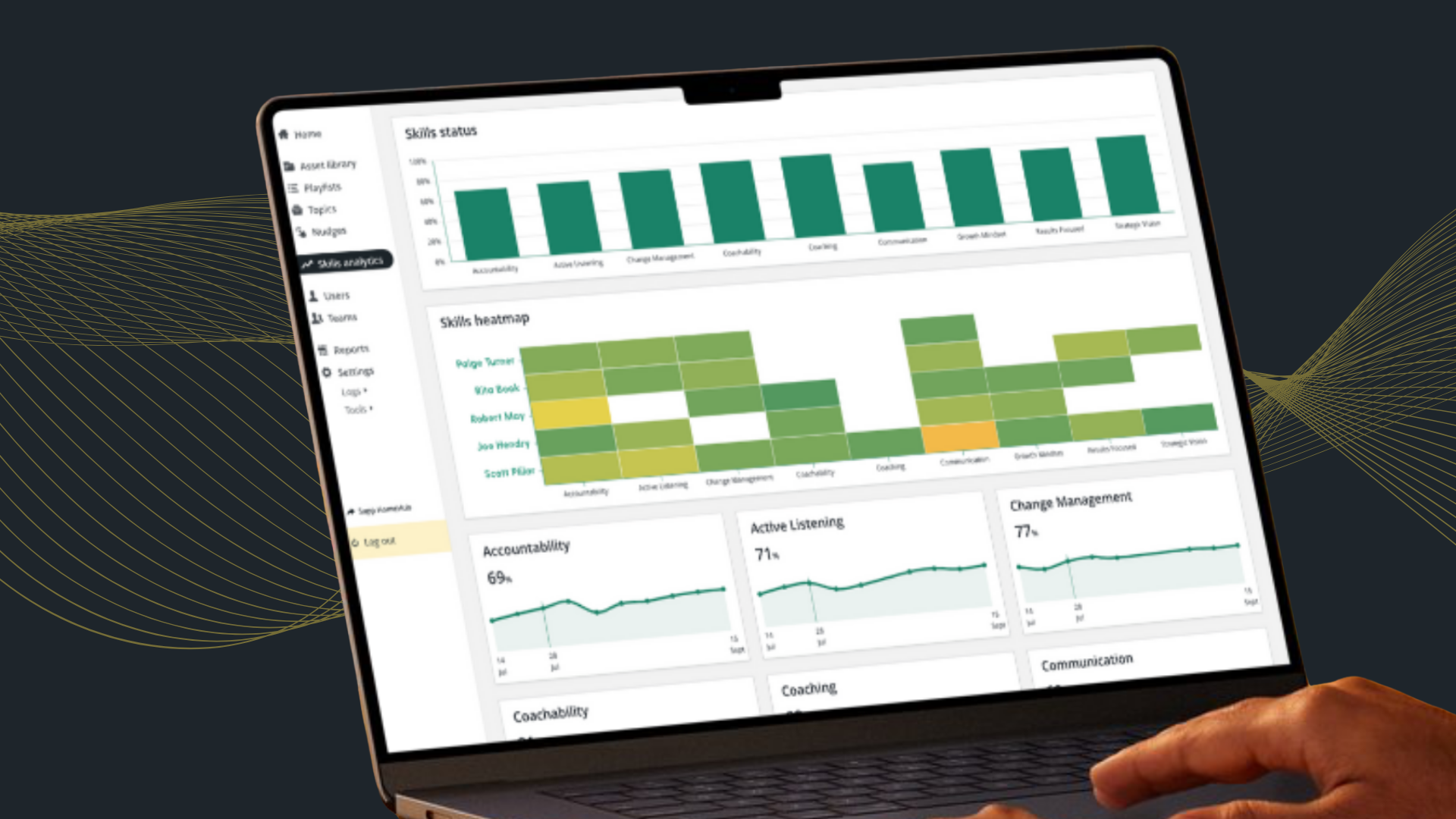
Helix, 5app’s AI skills intelligence platform, is one of the first solutions of its kind used for training delivery QA at scale.
By joining training sessions, Helix applies a consistent framework to evaluate skills, behaviours and real training delivery against your own framework, skill set and values. It continuously identifies key training skills, such as creating engagement, adapting delivery and providing actionable feedback, to help L&D teams understand which skills are being demonstrated across the training team, and how these skills impact learning outcomes.
Example:
The L&D team in a telecommunications firm has noticed that despite an extensive live training programme, engineers are struggling to fix complex problems with customers routers, leading to an increase in customer churn and negative online reviews.
Using Helix, the L&D team identify that the training team struggles to give meaningful feedback to engineers within training sessions. The L&D team can then focus on feedback delivery skills development for trainers, and the trainers themselves can access personalised learning resources and AI coaching to improve their approach to giving feedback.
Six months later, trainers are delivering corrective feedback in the moment, ensuring engineers leave training sessions fully understanding the training material. Engineers are better equipped to fix customers' routers, and customer churn and negative reviews decrease.
Rather than relying solely on isolated moments, such as a single human-assessed training session, Helix looks at the instructor's live training delivery over time to create a balanced and objective profile of performance. This also accounts for soft skill patterns over time, not just those demonstrated when they’re on best behaviour in front of a human assessor.
The result is clear, data-driven insight into what’s working and what could be improved, without the subjective variability of human observation. This doesn’t replace human feedback – it enhances it with real performance data, giving the L&D team a holistic view of the training team's strengths, growth areas and overall skills progress.
AI feedback with human judgement
.jpg?width=1280&height=720&name=QA%20Blog%203%20(2).jpg)
The real power of AI for training delivery QA lies in the balance between AI's ability to analyse data and surface patterns in seconds, alongside the human ability to interpret that data within the context of the training team and wider business.
Helix provides the data, highlighting trends, strengths and outliers. It provides consistency, scale and objectivity, helping overcome natural human bias and the limited availability of human trainers for broader, deeper skills insights across your training programmes.
The human L&D team bring empathy, context and professional insight. Maybe the manager of a trainer knows there have been issues with trainer availability, or last-minute strategic changes, or even personal challenges that are affecting performance. They can validate, question or dig deeper into the AI data to ensure trainers are being assessed accurately and fairly according to their own knowledge.
Together, we get the full picture.
The partnership between AI and human L&D teams allows for smarter, evidence-based decision making with the benefit of human understanding. With solutions like Helix, L&D professionals responsible for measuring the quality of training delivery can spend less time on manual reviews and more time on meaningful conversations around real performance improvement.
The benefits of AI for measuring training delivery quality
AI-powered training delivery QA offers tangible benefits at every level:
- Scalability: L&D teams can evaluate hundreds of sessions quickly and consistently, freeing them up for higher-value work.
- Evidence for accreditation: Provide auditable, data-backed proof of training quality and compliance, which is essential for highly regulated sectors or professional certification.
- Improved learner experience: Coaches receive real-time, personalised feedback that translates directly into better sessions and stronger outcomes for learners.
- Continuous performance improvement: Trends and insights across teams can highlight development priorities, shape future training and ensure consistent, continuous training delivery improvements organisation-wide.
- Evidence of ROI: AI gives you real evidence that your coaching and live training is (or isn't) working. You can link real skills to real outcomes, opening up conversations about learning ROI.
With Helix, quality assurance for training delivery evolves from being a reactive process into an ongoing cycle of continuous learning, feedback and growth.
Providing trainers with constructive insights and professional growth
The goal isn’t to judge your trainers – it’s to support them.
Helix is a personal development tool, not a surveillance tool. It gives trainers access to clear, actionable insights that promote self-awareness, confidence and ongoing skills improvement to support their own training delivery.
Instead of one-size-fits-all train-the-trainer courses that assume everyone needs to work on the same skills, Helix ensures trainers receive objective, highly personalised feedback that highlights patterns in their own training delivery over time. That helps them understand their strengths, recognise blind spots and refine their approach in a constructive, developmental way with curated learning resources tailored to their specific skills gaps.
In this sense, AI isn’t replacing human expertise – it’s amplifying it. Trainers get deeper insight into their delivery of training, while the L&D team receives assurance that learners are receiving the best possible training programmes that adhere to their quality standards.
Why AI-driven QA is the next standard for training excellence
Quality assurance in training is entering a new era.
As organisations demand greater transparency, consistency and measurable outcomes across their training programmes, AI platforms like Helix are setting a new benchmark for how training quality is defined and maintained.
By combining the speed and precision of AI with the nuance and empathy of human judgement, Helix empowers organisations and trainers to elevate their training delivery standards, build trust in their training QA process and, ultimately, provide more meaningful learning experiences.
AI-powered quality assurance for training delivery is the new standard for live training excellence, and the organisations who start measuring the skills and behaviours of their trainers today will reap the benefits of more impactful live training in the future.
Ready to explore the skills that show up in your live training delivery? Enter your email below to see how Helix can help you improve your training programme with AI-powered skills intelligence.
👇
.jpg?width=1280&name=QA%20Blog%203%20(1).jpg "How AI is transforming training quality assurance")