Soft skills are one of the most important differentiators between a great trainer and an average trainer. Measuring and analysing the soft skills of your trainers and coaches is key to levelling up your training effectiveness – and AI might just be the answer to levelling up your VILT...
We’ve all done it.
We’ve all sat through an excruciating training session with a trainer who has the charisma of plain toast, who would clearly rather be anywhere else. It feels more like an endurance exercise than corporate training – think Gareth Keenan’s health and safety training in The Office:
A trainer or instructor might be an expert in their field, but that doesn’t mean they’ll automatically be good at delivering training. In fact, a massive part of being a good trainer is nothing to do with knowledge – it’s about the soft skills you can bring to the role to make each session engaging and memorable.
If you’re offering instructor-led training (ILT) or virtual instructor-led training (VILT), you’ll understandably want to make sure your trainers are performing at their best. If you’re left in the dark about your training effectiveness, it’s time to consider a new approach.
The difficulty of assessing training effectiveness
For live training sessions, it’s not always easy to measure the quality of that training.
Many L&D teams rely on ‘happy sheets’ to find out how much learners enjoyed the training, or how useful they found it, but few go beyond this to uncover the real quality of the training.
Live ILT and VILT tends to be more expensive than asynchronous, on-demand elearning, as it requires the time and presence of trainers, instructors and facilitators, as well as preparation time and follow-up communications. Not all trainers are made equal, so the quality of the training you’re getting from your spend can vary wildly – and as a result, so can the learning outcomes.
Those happy sheets can only tell us so much. Learners may enjoy the session, but that doesn’t tell us if they liked the free lunch, they enjoyed having a couple of hours away from work or the trainer was actually effective. To dig deeper into trainer effectiveness, we need a better way to assess trainers while they’re actually training, without needing to rely on expensive human assessors.
How Helix analyses training effectiveness at scale
Trainers are often busy and pulled in lots of different directions – especially if they’re an SME imparting their wisdom, rather than a dedicated training instructor.
Formal assessments only tell us that a trainer knows what to do, not what they actually do. Any trainer can ace a quiz that tests their knowledge of a training framework or what they know about asking questions, delivering feedback or keeping learners engaged, but that doesn't mean that the skills necessarily transfer into real training sessions.
Manual observations can give us useful snapshots into the skills and behaviours trainers are displaying, but it's not scalable. If an assessor only attends 1% of each trainers' sessions to monitor for training quality, how can they know what's happening in the other 99% of sessions?
So that leaves L&D teams with a pressing question: how can we better measure training effectiveness and the quality of our training sessions without requiring a human assessor to attend every single training session?
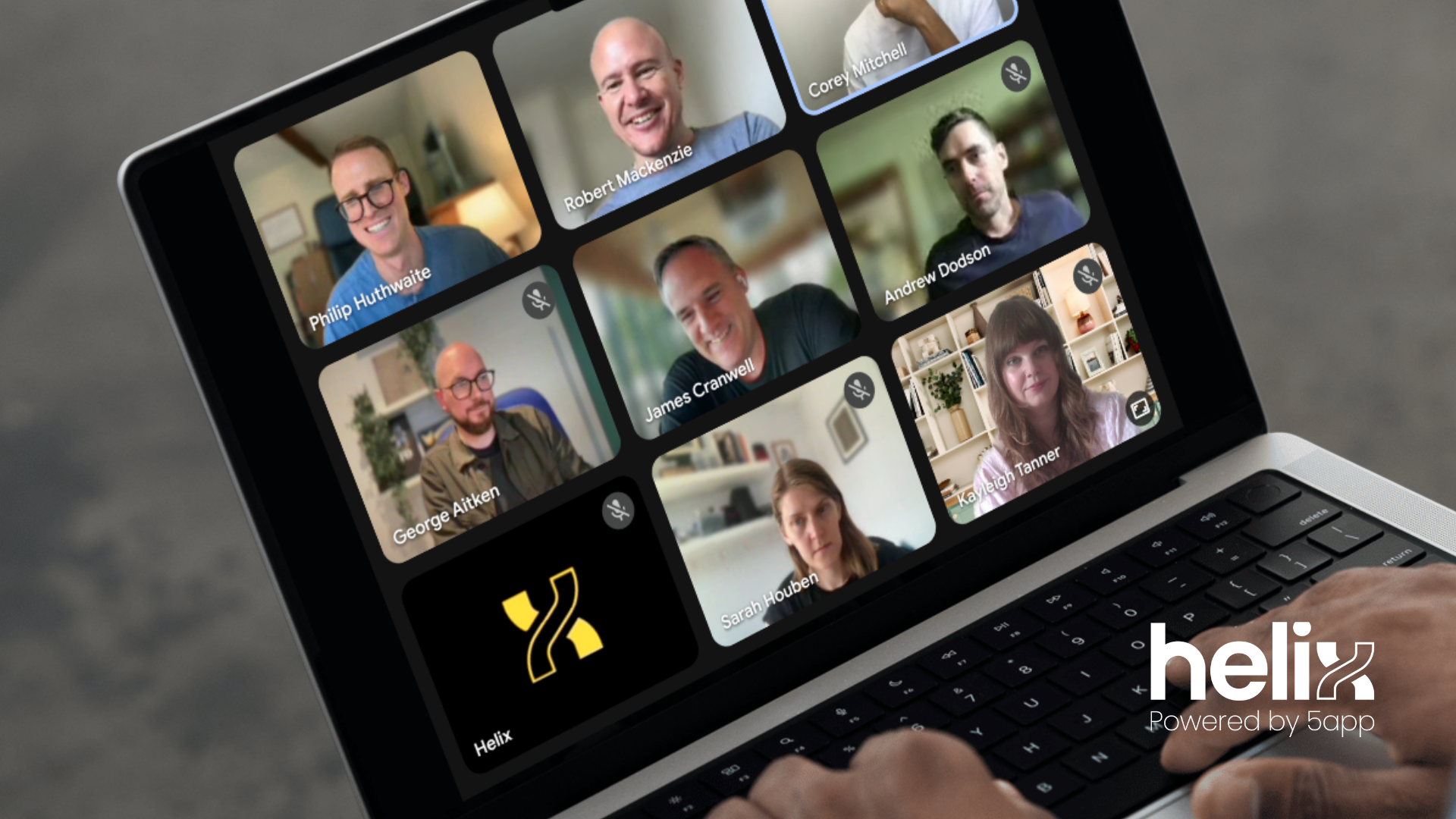
Enter Helix. Helix is 5app's AI skills intelligence platform which passively measures the soft skills of trainers and instructors in real time, making it the perfect sidekick to track training effectiveness at scale.
Let’s explore a few examples:
Guiding the session

Good trainers don't just need to be experts in their topics. They also need to be able to manage the flow of a training session. Training effectiveness relies in part on the trainer's ability to keep the session moving coherently without feeling rushed, repetitive or directionless, and addressing digressions swiftly without getting side-tracked without sticking rigidly to the agenda when it's clear the learners need a slightly different approach.
That means maintaining a logical, easy-to-follow session flow, managing the pace to ensure important material gets enough time and attention and balancing the planned structure with learner interaction without losing momentum.
Creating opportunities for engagement
Training sessions shouldn't just be a monologue from the trainer. If the trainer speaks at the learners for 99% of the session, it's likely they'll lose focus. Conversely, if the trainer relies too heavily on the learners themselves to keep the session moving, they will likely miss out on opportunities to share their own expertise and correct misconceptions.
Skilled trainers will create opportunities for learner engagement, whether that's asking questions, inviting different perspectives or building group discussions into the training session. Allowing learners to actively participate in training sessions keeps them engaged, and ensures misunderstandings can be addressed in the moment for more effective training.
Measuring coaching skills
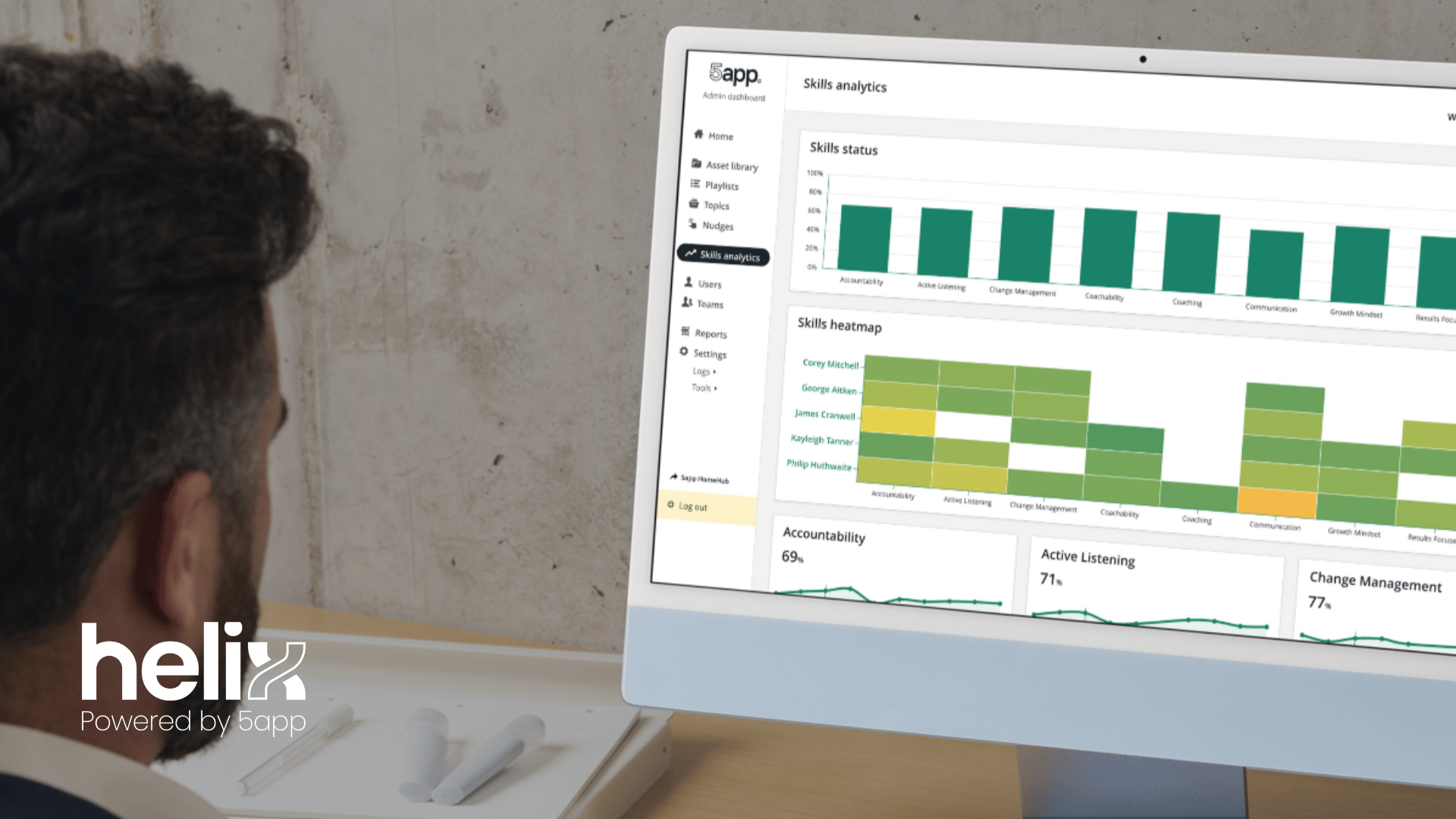
Coaching skills are essential for high-quality training, no matter the training framework followed or the topic being taught. Helix will join your coach’s VILT training sessions and listen out for key coaching behaviours (or indicators that their coaching isn’t hitting the mark).
For instance, is your trainer asking open-ended, reflective questions? Are they guiding learners towards the right answer rather than telling them what to do? Are they celebrating progress while also encouraging learners to stretch themselves? Are they revisiting goals? Are they offering personalised feedback? The way these behaviours are demonstrated will give you a valuable insight into the coaching skills of your trainers.
Understanding communication style
Each trainer will have their own approach to demonstrating communication skills. Some may be funny and conversational, while others will be more corporate and professional. Your organisation’s preferred approach doesn’t matter – Helix will assess your trainer based on your own definition of what good communication looks like.
Out off the box, Helix will look for behaviours like clear, structured delivery, adapting the message to the audience, checking understanding, balancing speaking and listening and summarising key points, but you're always able to measure trainers' communication skills against your own standards so it's more meaningful.
Tracking active listening

Training is a two-way street, and if a trainer doesn’t engage in conversation with their learners, it’s worth asking why! Nobody will understand 100% of the content 100% of the time, so good trainers should anticipate questions and be ready to clarify and elaborate on their points.
When questions inevitably arise in your VILT sessions, Helix will listen out for active listening behaviours like acknowledging emotions, such as confusion or frustration, listening without interrupting, summarising the learner’s point and following up to ensure understanding.
What are the benefits of tracking training effectiveness for L&D leaders?
Maintaining high standards across your live training should be a top priority for L&D leaders. Live training isn't cheap, so you want to be sure you're maximising your value for money and investing in engaging, effective instructors.
For L&D leaders, the benefits of choosing AI tools like Helix to track training effectiveness include:
- Real, data-backed insights – instead of relying on anecdotal feedback, happy sheets and gut feeling, you’ll get access to evidence-driven assessments of training delivery as they happen.
- Consistency at scale – a human assessor can’t be present in every single training session… but an AI bot can! With a solution like Helix, you can ensure every coach and trainer delivers to the same high standard across your training sessions.
- Continuous improvement – while traditional ‘train-the-trainer’ programmes focus on one-off improvements, tools like Helix support continuous improvement for coaches and trainers. It keeps learning front of mind and ensures trainers are constantly identifying ways they can improve their training effectiveness.
- Stronger stakeholder confidence – business leaders don’t typically have any visibility into the effectiveness of the trainers you use. Gathering real evidence that your trainers are ticking the right boxes will give your senior stakeholders the confidence they need that your training meets measurable quality standards.
- Efficient resource use – focus your time, investment and effort on the areas that make the biggest difference. For instance, instead of insisting all your trainers engage in communication workshops, you can pinpoint the specific skills each individual trainer needs to work on for personalised ‘train-the-trainer’ experiences.
What are the benefits of measuring training effectiveness via skills?
For the trainers themselves, regular skills tracking, feedback and QA creates a whole host of opportunities for recognition and professional development. It’s not about surveillance – it’s about helping trainers recognise their own skills and constantly refine and polish their training delivery for the best possible results.
Some of the biggest benefits of soft skill tracking for trainers include:
- Targeted feedback – trainers and coaches can instantly receive specific, actionable guidance on what’s working and what they can tweak to become even more effective. Instead of waiting for formal feedback from their manager, skills development becomes an iterative process with small, incremental changes after every training session.
- Skills development – the training QA process lends itself beautifully to ongoing skills development. It can flag up blind spots and skills gaps, and ensure the trainer has the information they need to develop consistently.
- Credibility and trust – instead of just saying you’re a great communicator or an effective coach, trainers can prove their strengths. This makes it significantly easier to build credibility with other departments and become a go-to trainer.
- Career progression – following on from the last point, this enhanced credibility better supports career progression. If a manager can see a coach’s skills, they can provide better-suited career opportunities while feeling sure that the trainer is the right fit for the job.
- Learner impact – many trainers choose their line of work because they love helping people learn. Improving their soft skills as a trainer is a great complement to improving their subject knowledge, ensuring the impact they have on learners remains strong and positive.
Raising the standard of live training and coaching with Helix
Until now, L&D departments have had to rely on anecdotal evidence and occasional observations to draw conclusions about their trainers and coaches.
Now, with the power of AI skills intelligence solutions like Helix, L&D teams can gain immediate insights into the skills of trainers, along with understanding how they’re developing over time.
AI is your secret weapon for strengthening your L&D offering, equipping trainers with the soft skills they need to perform at their best and maximising the impact of your training programme.
If VILT is a big part of your live training strategy, Helix can help you discover, measure and track the soft skills of your trainers and coaches to make sure you’re getting the best value out of your training investment. By taking two seconds to invite Helix to each training session, you’ll get access to a rich bank of data about every trainer, ensuring your L&D team can invest your time and budget in the right places and make the best decisions for your coaches, your stakeholders and your learners. It’s a real win-win-win!
To recap:
- Soft skills are an essential part of the live training experience
- Measuring the soft skills of your trainers will help you significantly elevate your live training effectiveness
- Better-skilled trainers achieve better learning outcomes
- Focusing on skills development helps build credibility and trust for coaches
- AI is a powerful tool for tracking and analysing the skills of your trainers in real time
Want to see Helix in action - then pop your details in below and watch a free walkthrough from our CEO, Philip 👇