AI has made it easier than ever to get feedback, practise new skills and reflect on how we work. Tools like ChatGPT can help employees brainstorm ideas, prepare for difficult conversations, analyse their performance and even act as an on-demand coach.
But there’s an important distinction between using AI to help develop a skill and using AI to actually measure that skill over time.
ChatGPT is a powerful general-purpose AI assistant. It can analyse information you give it, answer questions, generate feedback and support learning across almost any subject.
Helix, on the other hand, was built specifically for AI-powered skills intelligence. It analyses real workplace conversations to identify evidence of soft skills, tracks how those skills develop and connects these insights to personalised coaching and learning.
So which is better for skills development? Let’s take a look at how Helix compares with ChatGPT for skills measurement and development.
Helix vs ChatGPT at a glance
|
Capability
|
Helix
|
ChatGPT
|
|
Primary purpose
|
AI-powered skills intelligence and workforce development
|
General-purpose AI assistant for knowledge, productivity, learning and problem-solving
|
|
Measures workplace soft skills
|
Purpose-built to identify behavioural evidence against defined skills frameworks
|
Can analyse skills when given the relevant context or transcript
|
|
Automatically analyses workplace conversations
|
Yes – joins Teams, Zoom and Google Meet meetings
|
Can analyse transcripts or information provided to it
|
|
Tracks skills development over time
|
Yes – continuous skills measurement and progress tracking
|
Can support reflection across conversations, but is not primarily a longitudinal skills measurement platform
|
|
Identifies development opportunities
|
Automatically highlights strengths and areas for improvement
|
Can identify opportunities when prompted
|
|
Personalised development recommendations
|
Connects skills insights with relevant learning and coaching
|
Can recommend learning, activities and next steps through conversation
|
|
AI coaching
|
Integrated with VeeCoach for ongoing skills coaching
|
Conversational AI can provide coaching and practice
|
|
Behavioural evidence
|
Analyses real workplace interactions against defined behavioural criteria
|
Analyses the information supplied to it
|
|
Skills analytics for L&D
|
Organisation-wide dashboards, trends and skills insights
|
Can analyse organisational information when connected to appropriate data sources
|
|
Cross-platform flexibility
|
Works across Teams, Zoom and Google Meet and integrates with existing learning ecosystems
|
Works across a wide range of workflows and can connect to external apps and organisational knowledge on supported plans
|
|
Purpose-built skills framework
|
Yes – Core 9 plus custom skills frameworks
|
No dedicated skills measurement framework
|
|
Development loop
|
Measure → feedback → develop → track
|
Prompt → insight → action, depending on how the user applies it
|
What is Helix?
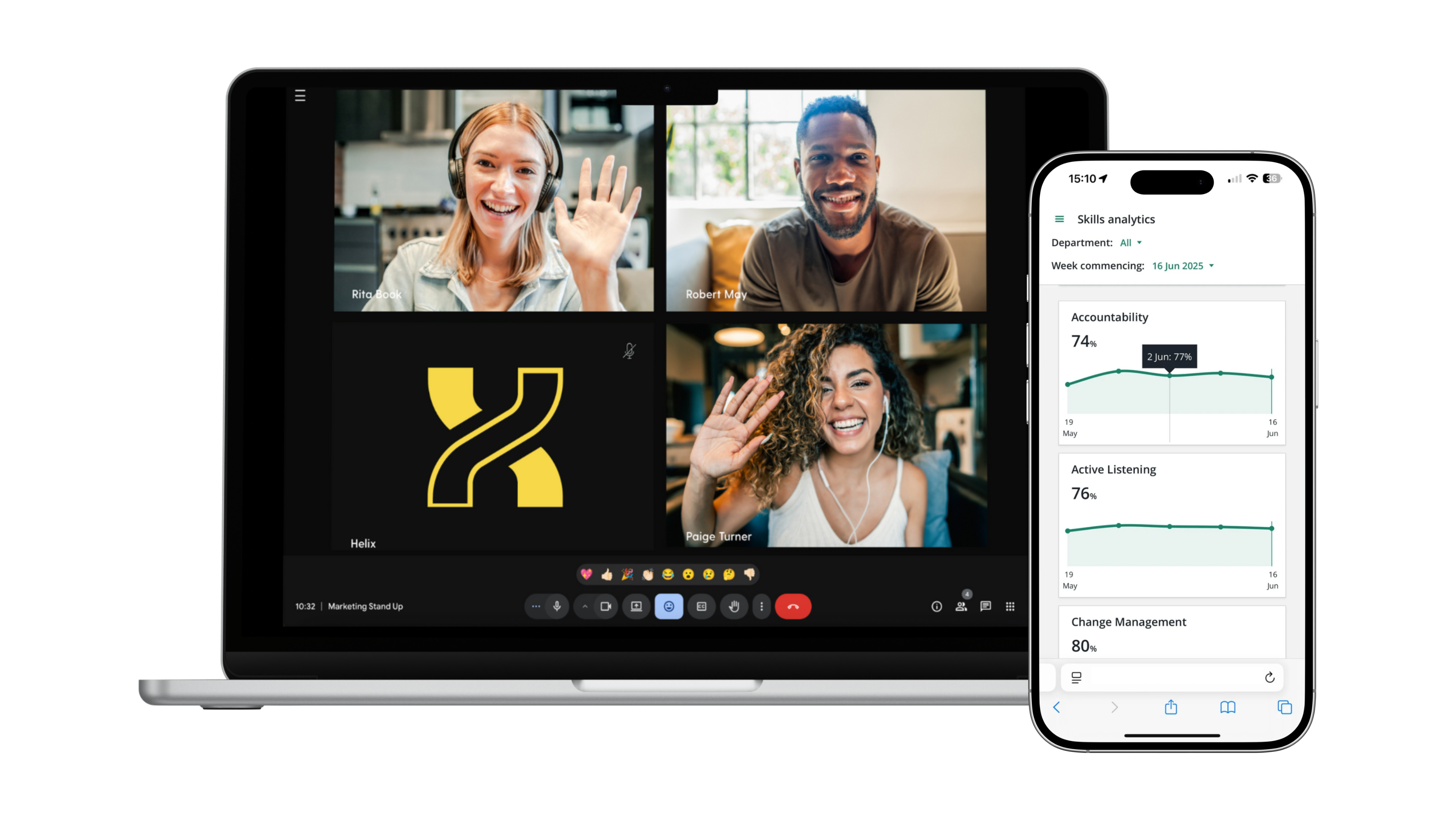
Helix is 5app’s AI-powered skills intelligence platform, designed to help organisations see, measure and develop the human skills that drive performance.
Instead of relying entirely on lengthy surveys, biased self-assessments or occasional manager observations, Helix looks for evidence of skills in the way people actually communicate and collaborate.
Helix can join meetings in Microsoft Teams, Zoom and Google Meet as a silent participant. It analyses the resulting conversation and identifies evidence of specific skills, using 5app’s proprietary 3Q Engine and defined behavioural frameworks. This gives organisations a continuous source of skills intelligence rather than a snapshot gathered during a performance review.
Helix can help organisations measure key soft skills, identify individual strengths and development opportunities and evaluate whether learning and coaching interventions are changing behaviour.
What is ChatGPT?

ChatGPT is a general-purpose AI assistant that can support a huge range of workplace tasks, from writing and research to analysis, brainstorming, problem-solving and learning.
For employees, it can act as an always-available source of information and support. Someone might use ChatGPT to develop and support skills such as preparing for a difficult conversation, practising giving feedback or asking for feedback on a piece of writing.
And increasingly, workplace versions of ChatGPT can connect to organisational information and approved business apps, giving employees more relevant support within their existing workflows. That makes ChatGPT extremely useful for learning and self-directed development.
But there is a difference between ChatGPT being capable of analysing a skill and being a platform designed to systematically measure that skill across an organisation.
Skills measurement: general-purpose AI vs specialist skills intelligence
This is where the biggest difference between Helix and ChatGPT becomes apparent. You can absolutely ask ChatGPT to assess a skill. For example, a manager could provide a meeting transcript and ask ‘How effectively did I demonstrate active listening in this conversation?’.
ChatGPT could identify examples, explain what went well and suggest ways to improve. That can be genuinely useful... but what happens next?
To build a reliable picture of someone's development, you need more than one useful piece of feedback. You need consistent measurement, comparable data and evidence collected over time, not just a single snapshot.
That's where Helix takes a different approach. Rather than waiting for an employee to provide a transcript and ask the right questions, Helix is designed to capture behavioural evidence automatically from real workplace conversations. It evaluates that evidence against defined skills and creates a record of how those skills are developing.
So instead of asking ChatGPT for feedback when you need it, using a platform like Helix means you can let AI continuously understand how your skills are showing up at work. That distinction matters for L&D teams trying to move from subjective skills assessments towards measurable behavioural change.
Developing skills, not just measuring them
Measurement is only useful if it leads to action. Knowing that someone needs to improve their communication, coaching or change management skills is one thing. Helping them actually improve is another.
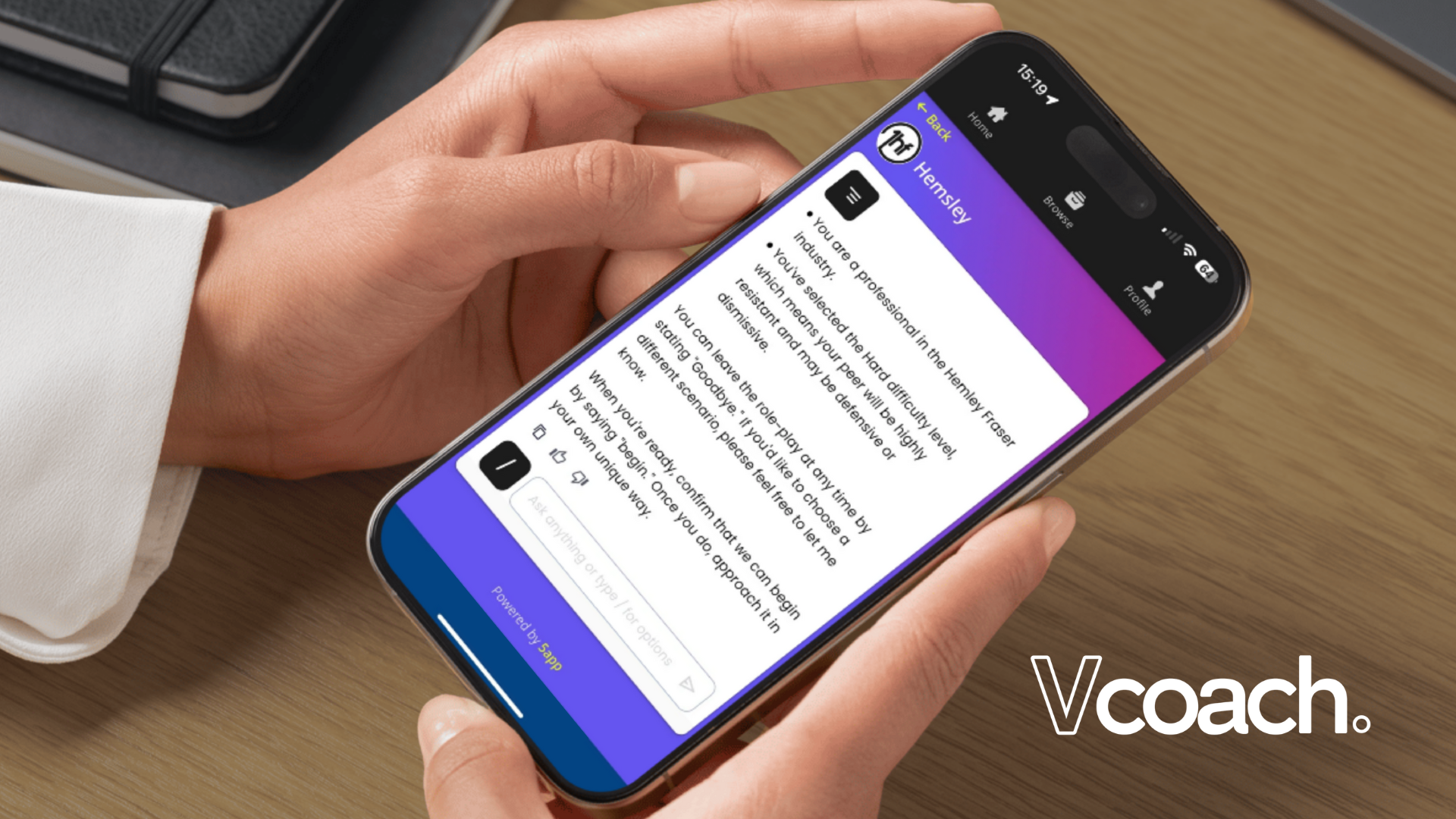
Helix connects skills intelligence with development through its integration with VeeCoach, 5app’s AI coaching agent. Once Helix identifies a development opportunity, learners can access support that helps them put the insight into practice, including personalised learning recommendations, AI coaching conversations and interactive roleplay scenarios.
Helix can also connect skills insights with existing learning content, helping organisations make better use of the resources already sitting inside their learning platform or learning ecosystem. Instead of allowing your courses to gather dust, Helix ensures that relevant content is constantly surfaced and put in front of the right people according to their skills needs.
ChatGPT can support many of these activities too. An employee can ask ChatGPT to create a development plan, practise a difficult conversation, explain a leadership concept or act as a coaching partner. With the right prompt, it can be remarkably effective.
The difference is that ChatGPT generally starts with the question the employee asks, whereas Helix starts with evidence of what is happening in the workplace. It depends on the employee asking the right questions or constructing a good AI prompt, as opposed to starting everyone off on a level, standardised playing field with Helix.
That creates two different approaches to development. While ChatGPT is highly responsive and user-led, Helix is designed to be evidence-led and continuous.
Flexibility beyond a single technology ecosystem
One of the advantages of ChatGPT is that, unlike Microsoft Copilot, it isn't tied to a single productivity suite. It can be used across different types of work and, depending on the plan and configuration, can connect with external apps and organisational knowledge. That makes it a highly flexible general-purpose AI layer for organisations.
Helix takes a similarly platform-agnostic approach from a learning technology perspective. It can analyse meetings hosted on Microsoft Teams, Google Meet and Zoom, ensuring all the most important business calls are captured. It can also work alongside your existing learning platforms, coaching solutions and wider learning ecosystems.
That means an organisation doesn't need to choose between its existing technology and specialist skills intelligence. For example, a business could continue using Microsoft Teams and ChatGPT for everyday productivity, while using Helix to understand how communication and leadership skills are developing.
Measuring the human skills that matter
Technical skills can often be tested relatively easily. Can someone use a particular piece of software? Can they write a particular type of code? Do they understand a specific process?
Human skills are harder to measure. Communication, coaching, active listening, accountability and strategic thinking are notoriously some of the hardest skills to measure, as they show up through real behaviour, not as part of a quiz or a self-assessment. They can change depending on the situation, the people involved and the context.
That's why traditional skills measurement often relies on self-assessments, surveys, manager ratings or 360-degree feedback. These approaches all have value, but they rely heavily on perception and opinions.
Helix adds another source of evidence by analysing how people demonstrate business-critical skills in real conversations, whether that’s one of the 90+ skills available out of the box or a custom skills framework for organisations with their own established leadership or competency frameworks.
While ChatGPT can certainly help employees think about these skills, it’s not primarily a skills intelligence system. ChatGPT is the jack of all trades to Helix’s master of one.
That distinction becomes particularly important when the goal is not simply helping one person improve, but understanding capability across an entire organisation.
Enterprise insights for L&D and HR leaders
L&D leaders increasingly need answers to questions such as:
- Which skills are strongest across our workforce?
- Where are our biggest capability gaps?
- Which teams need additional development?
- Are our leadership programmes changing behaviour?
- Where should we invest our learning budget next?
A general-purpose AI assistant can help analyse organisational information when it has access to the relevant data – but that doesn't necessarily give L&D teams a dedicated, continuously updated picture of workforce skills.
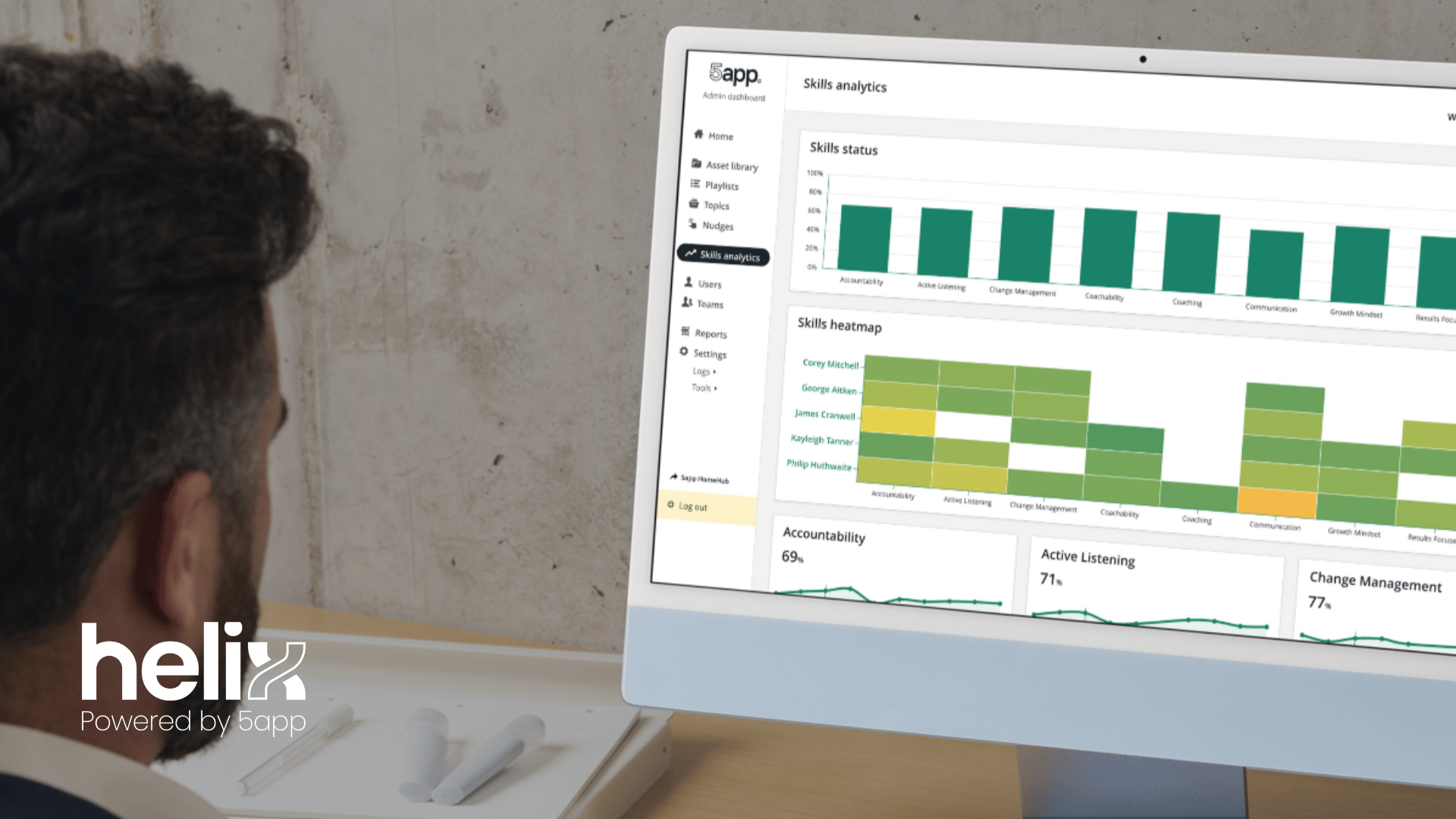
That's one of Helix's core purposes. Its analytics give organisations a way to move from individual observations towards a broader view of capability, including trends and aggregated insights across teams.
For L&D leaders, this creates a much more direct connection between skills intelligence, learning activity and behavioural change. Instead of stopping at vanity metrics such as course completions or attendance, organisations can start asking a more meaningful question: ‘Did the learning actually change how people behave at work?’.
Can Helix and ChatGPT work together?
Yes – and in many organisations, they probably should. It's tempting to think about AI tools used for learning as competitors, but Helix and ChatGPT are designed to solve different problems.
ChatGPT is a broad AI assistant that can help people learn, think, create and get work done, much like Copilot, Claude and Gemini.
Helix is a specialist skills intelligence platform that helps organisations measure behaviour, identify development opportunities and track skills growth.
Used together, they can form the foundations of a powerful learning ecosystem. For example, ChatGPT could help an employee prepare for an important presentation, while Helix measures how effectively they demonstrate communication skills in the real meeting.
This isn’t a case of choosing one tool over another. Instead, it means using each technology where it provides the most value.
How do Helix and ChatGPT support skills development?
The key difference is the starting point.
Helix starts with observed workplace behaviour and uses that evidence to create a continuous development cycle.
ChatGPT starts with the user's question, context or task and helps them move forward from there.
Helix for skills development
Helix follows a continuous skills development loop:
- Observe – Helix joins workplace meetings and analyses conversations.
- Measure – It identifies evidence of specific skills being demonstrated.
- Feedback – Users receive insights into strengths and development opportunities.
- Develop – Relevant learning, coaching and practice activities can be recommended.
- Track – New conversations provide further evidence, allowing progress to be monitored over time.
This turns skills development into an ongoing process rather than something that happens once or twice a year.
ChatGPT for skills development
ChatGPT takes a more manual, user-led approach:
- Ask – The employee identifies a question, challenge or development goal.
- Explore – ChatGPT explains concepts, provides examples or challenges assumptions.
- Practise – The employee can roleplay conversations, rehearse scenarios or test their knowledge.
- Reflect – ChatGPT can analyse information provided by the user and offer feedback.
- Act – The employee can turn those insights into a plan, activity or next step.
This makes ChatGPT an incredibly useful learning companion, but crucially, it relies more heavily on the employee knowing what to ask, providing the relevant context and choosing to engage with the development process.
Helix is designed to reduce that reliance and friction by bringing behavioural evidence into the process automatically. Helix can be auto-invited to chosen meetings, and it provides fully personalised feedback automatically, so there’s no need to craft the perfect AI prompt or remember to engage with the platform.
Is it easier to get started with Helix or ChatGPT?

It completely depends on what you're trying to do.
ChatGPT is already familiar to millions of people and it's incredibly easy to get started. An employee can open a conversation and immediately begin asking questions, practising skills or exploring a topic. Many of us already have the ChatGPT app on our phones or bookmarked on our work browsers, so it’s easy to open a new chat and get started.
For organisations, however, the setup and governance requirements will depend on the ChatGPT plan, connected apps, data sources and permissions involved. Not every business would be happy to allow employees to discuss confidential meetings with a mainstream AI tool like ChatGPT, which makes it trickier to navigate.
Helix is purpose-built for organisations that want to introduce skills intelligence into their existing workflow, and it can start small. An individual leader can begin using Helix to understand their own strengths and development opportunities before expanding the approach across a team or organisation, helping to demonstrate value before committing to a wider rollout.
The important thing is that the two tools are solving different problems. If you want an AI assistant that employees can turn to for almost anything, ChatGPT is an obvious choice, while if you want a dedicated way to measure and develop workplace skills, Helix is designed specifically for that job.
Which platform should I choose: Helix or ChatGPT?
There isn't a universal winner because Helix and ChatGPT aren't really substitutes.
Choose ChatGPT if your priority is:
- General-purpose AI assistance
- Learning and knowledge support
- Brainstorming and problem-solving
- Writing and content creation
- Flexible support across a wide range of tasks
Choose Helix if your priority is:
- Measuring workplace skills and gaps
- Continuous skills intelligence
- Tracking development over time
- Connecting skills data with learning
- Giving L&D and HR teams organisation-wide skills insights
Ultimately, ChatGPT helps people use AI to learn and work more effectively. Helix helps organisations understand how people are actually developing their skills. For businesses serious about turning learning investment into measurable behavioural change, that distinction is an important one.
For organisations that want to move from ‘we delivered the training’ to ‘we can see the behaviour changing’, that requires a very different approach. That’s why choosing between Helix or ChatGPT (or both!) could help you get the results you want from your organisation’s AI-powered skills development.