L&D budget cuts are constantly under threat. Here’s why it’s happening and how learning and coaching vendors can protect their customer relationships when budgets are at risk.
When organisations face financial pressure, learning and development budgets are often among the first to be reduced or reallocated.
This isn’t usually because L&D lacks value. It’s because L&D impact is harder to prove than other business functions.
Sales can show pipeline. Marketing can show leads. Operations can show cost savings. But L&D is often left trying to prove business impact without consistent, measurable data. LMS logins and learner satisfaction don’t quite stack up against other departments’ cold, hard business results.
That makes learning budgets vulnerable during every review cycle. It’s worrying for customers, but even scarier for the learning vendors trying to maintain strong relationships.
Why L&D programmes get cut even when they work
The reality is that budget decisions rarely remove the worst programmes – they remove the least defensible ones.
In competitive budget conversations, L&D is judged against:
- Revenue-generating initiatives
- Cost reduction programmes
- Operational investments with clear KPIs
If learning impact can’t be translated into those business-critical terms, the programme becomes optional, not essential.
This is why conversations often sound like:
- “We’ve had good feedback, but…”
- “It feels valuable, but we can’t prove ROI…”
- “We think it’s working, but we’re not sure…”
That uncertainty is what leads to cuts – not because it’s a ‘bad programme’, but because you can’t prove it’s worthwhile. Even when learning is improving performance, retention or sales outcomes, lack of attribution makes it difficult to defend.
Why traditional L&D measurement is no longer enough
In stable environments, L&D reporting often relies on vanity metrics, such as:
- Attendance rates
- Course completions
- Satisfaction scores
- Post-training surveys
But in budget scrutiny cycles, these metrics are not enough.
They don’t demonstrate behaviour change, on-the-job application or business impact, which is what will make your senior leaders and budget holders sit up and pay attention. This gap between activity and outcomes is where L&D loses budget protection.
What 'defensible L&D' means in budget conversations
To protect learning investment, organisations increasingly require evidence that shows:
- How behaviour changes after learning
- How skills develop over time
- How learning links to business performance
- How impact continues beyond training delivery
Without this, L&D is categorised as ‘supportive’ or ‘optional’, making it easy to reduce or remove entirely.
How to make L&D impossible to cut
To protect learning budgets, programmes must shift from delivery-focused to impact-focused design:
1. Align learning with business outcomes
Link every programme to measurable organisational priorities such as:
- Performance improvement
- Leadership capability
- Customer outcomes
- Retention and engagement
2. Measure behaviour change, not just participation
Replace basic vanity metrics with evidence of:
- Skills application
- Behaviour shifts in the workplace
- Consistency over time
3. Show impact continuously
Move from end-of-programme reporting to ongoing visibility of:
- Progress
- Engagement
- Skill development
4. Equip internal champions with evidence
L&D leaders need clear, defensible data to justify budgets in senior leadership discussions.
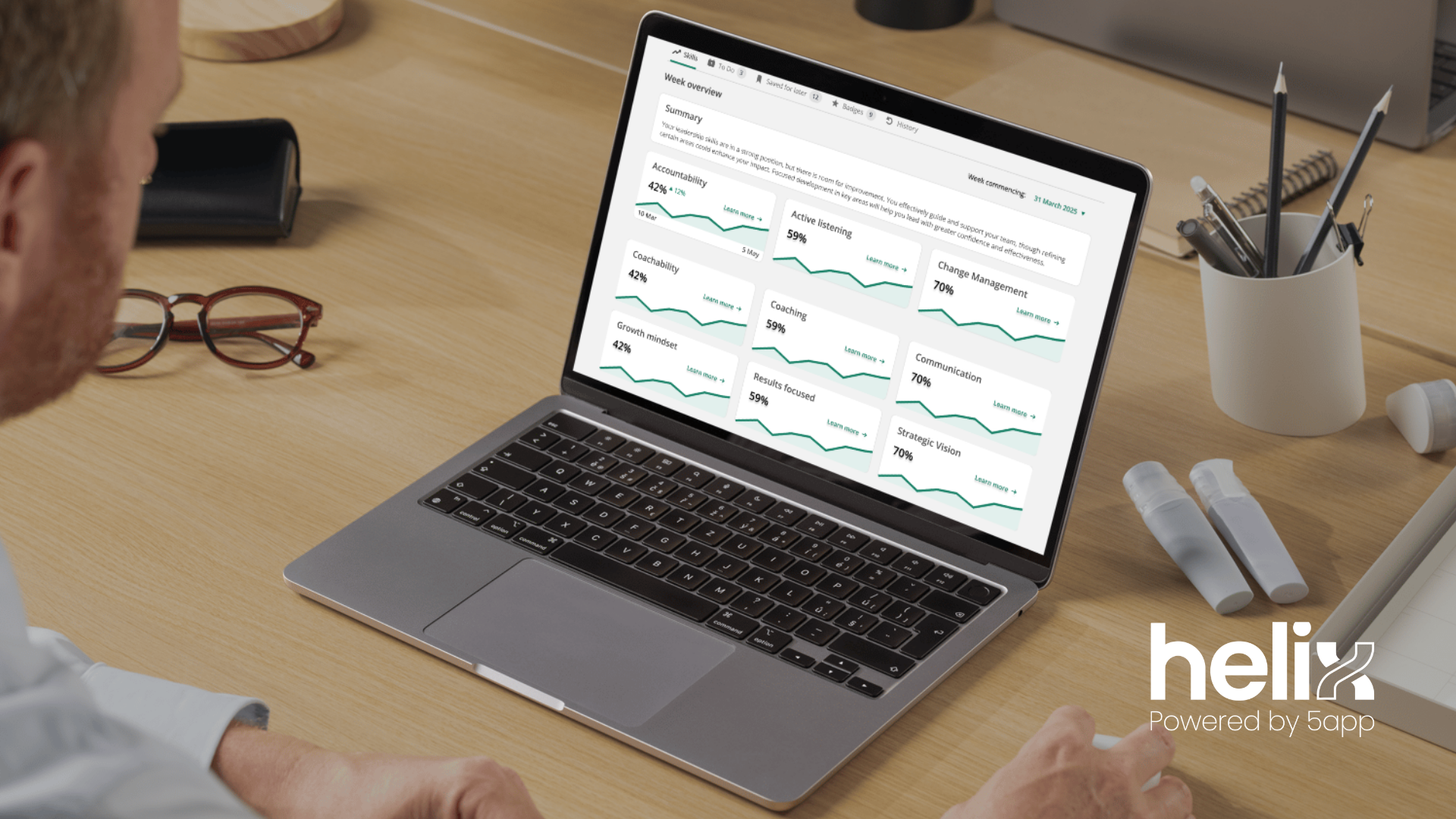
Without this evidence, even the most effective programmes become difficult to defend, making getting the right tech in place to identify and analyse data crucial. Helix, 5app's AI skills intelligence platform, is a great place to start for learning vendors looking to provide customers with real evidence of learning impact.
Why proving L&D ROI is now a survival requirement
In 2026, L&D budget decisions are based on real, measurable learning impact, not just anecdotes, gut feeling or vanity metrics.
If your programme can’t demonstrate measurable outcomes, it’s at risk, regardless of quality.
In our next post, we’ll explore how you can make smart use of behavioural data to make your learning programmes impossible to cut the next time your customers’ renewal period comes around.